.png)

.png)
When David, a retired public employee, passed away, his wife Linda expected the survivor benefits they’d counted on to arrive within weeks. Instead, she found herself calling the same number for months, each time repeating her story to a new voice and hearing that another form was missing. Letters came back stamped “Incomplete.” Her savings dwindled as she waited for what her husband had earned through a lifetime of service.
Linda’s experience is neither unique nor rare. Tens of thousands of families across retiree survivor benefit programs face the same cycle: delayed payments, missing documents, and endless follow-ups. Some wait months, and others wait years.
When grief turns into a paperwork marathon, it’s often not humanity or compassion that is broken but the systems meant to deliver it. That realization sparked a transformation: to create a process that delivers with both speed and humanity so families can find support, not struggle, when they need it most.
For years, retiree survivor benefit processing ran on outdated, manual workflows that couldn’t keep pace with the institution’s growing member base. An intent to provide timely support often turned into a drawn-out process filled with delays, data gaps, and administrative strain.
With growing awareness of how delays affected grieving families, the agency knew it was time for a change. The focus shifted from paperwork to people, to build a process that was faster, clearer, and rooted in empathy. The transformation was built around three priorities:
To bring this vision to life, the agency partnered with EvonSys to modernize retiree survivor benefit processing using Pega Low Code technology. The platform enabled faster development, seamless integration, and more intelligent automation, combining efficiency with empathy to ensure every step of the process was more rapid, clearer, and more reliable.
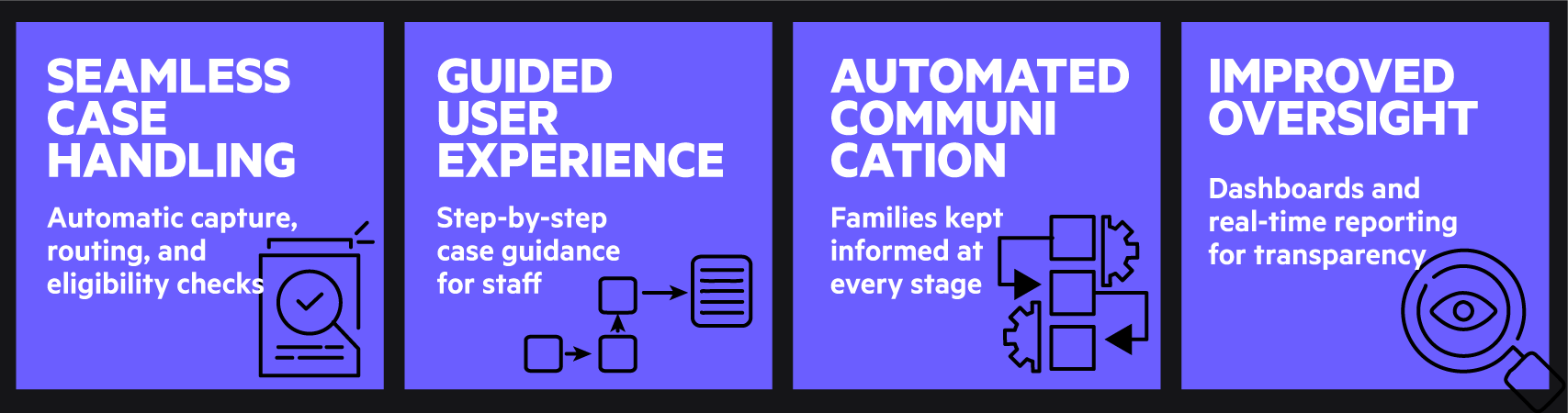
For Linda, who once spent months chasing paperwork, the experience would look very different today. What once meant endless follow-ups and uncertainty has become a transparent, guided process powered by Pega Case Management, bringing structure, visibility, and peace of mind to every claim.
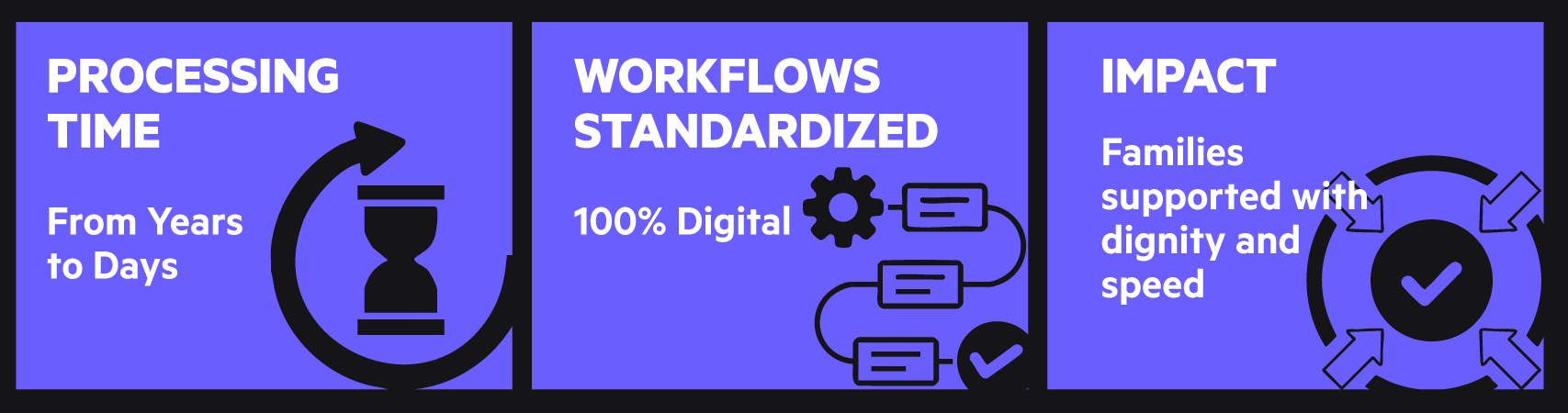
This shift from years to days shows that efficiency and empathy can go hand in hand. With Pega Low Code automation, the program redefined how retiree survivor benefits are processed, ensuring that every beneficiary receives what they are entitled to, quickly, accurately, and with dignity. Families now receive timely updates and clear communication throughout the process.
Explore how low-code automation drives speed, accuracy and transparency

.png)


.png)