.png)

.png)
A spreadsheet may seem sufficient to manage volunteers in your nonprofit organization, especially in the early stages or operating on a smaller scale. However, every hour you spend fixing cells and formulas takes you away from the mission. As your volunteer base grows and your initiatives expand, manual tracking begins to fall short, making it harder to stay organized.
Managing volunteers effectively becomes impossible when relying on outdated tools. As you depend on spreadsheets, you end up with fragmented information across multiple systems. Critical information, such as volunteer preferences and compliance requirements, remains scattered or locked away in silos.
Without automation, reminders turn into endless email threads that consume valuable time. Simple tasks like sending reminders turn into endless email threads, taking up valuable time.
This raises a question worth pausing on: Why do teams still rely on spreadsheets to manage volunteers even when the system no longer effectively supports their needs? In this blog, let’s explore why nonprofit organizations stick to spreadsheets and how volunteer management helps overcome these challenges.
No one sets out to run a nonprofit on spreadsheets. They grow into the system, one tab for sign-ups, another for hours, and a third for budgets. One day, the spreadsheet becomes the core system for volunteer management. It feels efficient at first as they are free, flexible, and familiar.
Another reason is the combination of limited budgets, the need for immediate flexibility, and a lack of technical expertise to implement the system.
But every manual update in spreadsheets adds invisible weight. What starts as a quick fix slowly becomes a quiet liability that shows up in three critical ways:
Ignoring these signs often worsens the challenges already faced by nonprofit organizations.
Spreadsheets may seem simple, but they come with severe limitations:
These significant challenges in nonprofit organizations act as barriers to growth, trust, and long-term sustainability.
Managing volunteers requires more than just names and dates. It demands:
Spreadsheets can't automate these tasks. They're prone to human error, lack real-time collaboration, and don't integrate with systems like your CRM or fundraising tools. As your volunteer base grows, the complexity of your volunteer tracking efforts increases, complicating them and multiplying the challenges in your organization.
Volunteer management brings together people, processes, and data into a connected system that enables nonprofits to plan, engage, and measure volunteer contributions effectively.
Unlike spreadsheets, which act as static records, modern volunteer management systems work as dynamic coordination platforms. They continuously adapt to changes in volunteer availability, program needs, and organizational priorities, ensuring that every interaction is structured, trackable, and meaningful. Managing volunteers directly influences retention, program success, and the organization’s ability to demonstrate impact.
Today, nonprofits are moving to tools that handle the boring parts of tracking volunteers and keeping them involved. These tools offer:
Automation helps teams focus more on people by reducing repetitive work.
Here's how forward-thinking nonprofits are transforming their approach to managing volunteers:
They're the signs of stronger communities, deeper engagement, and scalable impact.
Spreadsheets help you get started. But they can't take you where you want to go. Manual systems limit your capacity, slow your mission, and hide the impact you're working hard to create.
It's time to imagine a smarter, more connected way to manage volunteers, where automation handles the repetitive work so your team can focus on what truly matters.
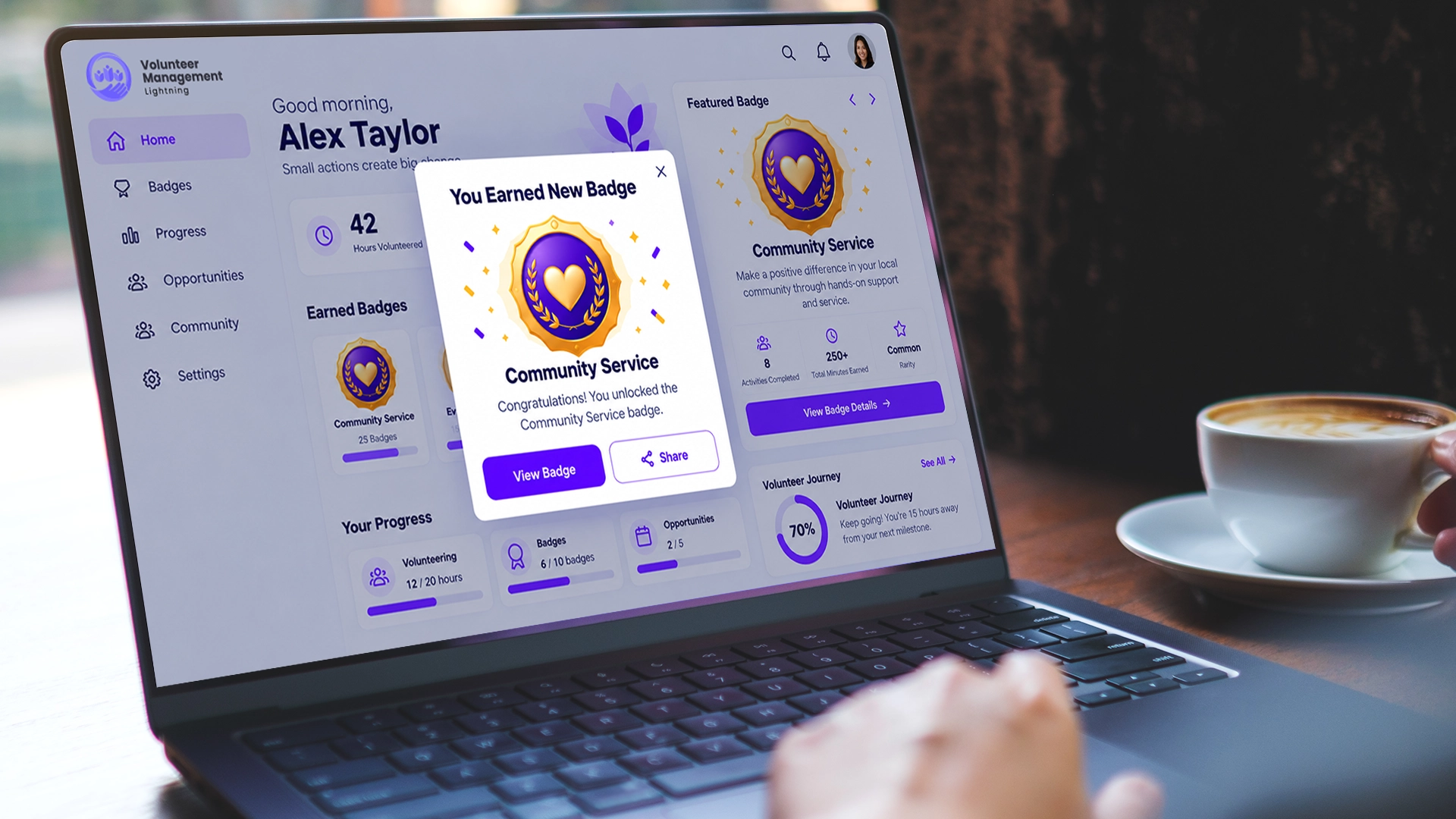
EvonSys’ Lightning-native volunteer management app helps nonprofits overcome common challenges by centralizing data, simplifying volunteer tracking, and providing real-time visibility into engagement and impact.
See How EvonSys Simplifies Volunteer Management

.png)


.png)