.png)

.png)
According to Gartner, over 75% of new enterprise applications will be developed on low-code or no-code platforms by 2026, up from less than 25% just a few years ago. Additionally, at least 80% of low-code users are expected to come from outside formal IT departments. This rapid shift signals a clear turning point in how organizations build, modernize, and scale digital solutions.
Low-code is no longer viewed as a shortcut. Instead, it is emerging as a core pillar of enterprise digital transformation helping organizations accelerate delivery, reduce dependency on scarce development talent, and respond faster to changing business demands. As platforms mature, they now combine visual development with AI-assisted capabilities, enterprise-grade scalability, and built-in security and compliance.
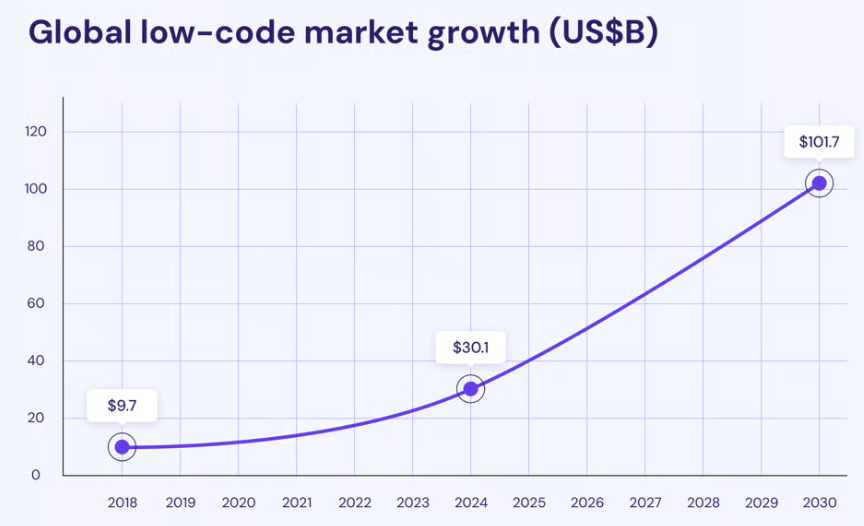
In this blog, we explore the key low-code trends shaping 2026, how industries are preparing for large-scale digital transformation, the challenges they are likely to face, and how low-code platforms are helping organizations turn complexity into opportunity in the next phase of transformation.
While ambition is high, execution remains complex. Industries preparing for large-scale digital transformation are encountering several persistent challenges that are intensifying in 2026 amid AI acceleration and regulatory pressures.
Decades-old systems still support mission-critical operations. Replacing them is risky, expensive, and slow, while keeping them unchanged limits innovation, raises cyber risks, and adds 10-20% annual maintenance costs.
Demand for skilled developers greatly exceeds supply, leaving IT teams overstretched with large backlogs and pressure to deliver faster. In 2026, up to 90% of organizations face serious IT skills gaps, which could lead to $5.5 trillion in global economic losses from stalled projects, especially in AI, cloud, and cybersecurity.
As digital initiatives scale, organizations worry about application sprawl, data security, and regulatory compliance especially when non-technical users are involved. Rising threats and stricter enforcement demand proactive frameworks to avoid costly fines and trust erosion.
Many organizations succeed with small digital wins but struggle to replicate that success across departments, geographies, and use cases. Without robust governance, initial successes often lead to fragmented ecosystems, hidden technical debt, and inconsistent ROI.
This is where low-code’s role becomes transformative not as a workaround, but as a strategic response to these challenges.
Low-Code Solution: Extend and modernize existing systems without full replacement.
Key Benefit: Deliver new capabilities on top of legacy infrastructure, reduce risk, cut costs, and unlock innovation faster.
Low-Code Solution: Empower citizen developers (business users) to build apps responsibly.
Key Benefit: Slash IT backlogs, accelerate delivery, and enable non-IT teams to create solutions securely.
Low-Code Solution: Use built-in enterprise guardrails, audit trails, security controls, and compliance templates.
Key Benefit: Scale innovation safely while meeting strict 2026 regulations and avoiding costly breaches.
Low-Code Solution: Leverage robust API integrations and end-to-end automation for complex workflows.
Key Benefit: Achieve mission-critical scale with consistent quality and rapid ROI.
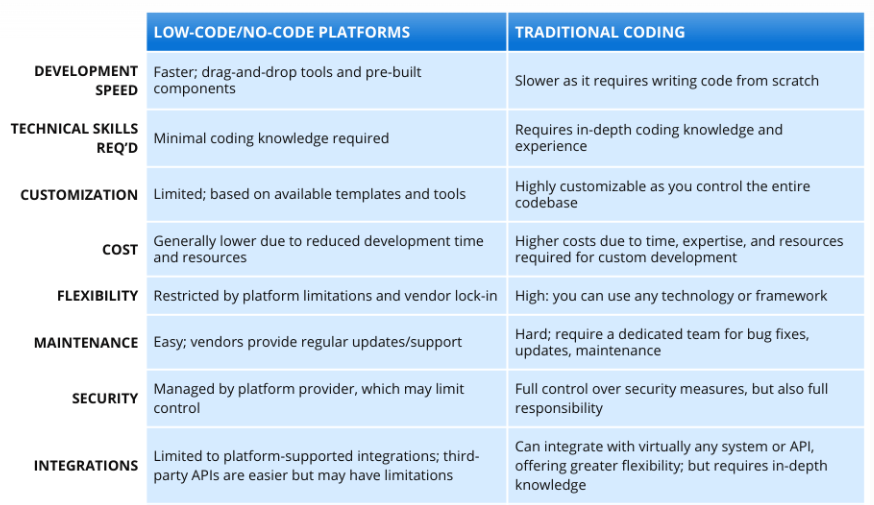
Adopting low-code requires a structured strategy to align it with your organization's goals, existing infrastructure, and team dynamics. Start by evaluating your current digital maturity and identifying high-impact use cases, such as automating workflows or modernizing legacy apps. Focus on platforms that offer strong integration capabilities, AI features, and enterprise-grade security.
Adopt a secure, scalable low-code platform that balances speed with governance.
Connect seamlessly to core systems to unlock value and prevent silos.
Enable shared ownership between IT and business for governed innovation.
Pilot Phase: Identify a low-risk project. Build, test, and measure ROI, aim for 70-90% faster delivery compared to traditional methods.
Scale Phase: Expand to multiple departments with reusable templates and integrations. Monitor adoption and iterate based on feedback.
Optimize Phase: Incorporate AI for advanced automation, conduct regular audits, and refine processes for long-term resilience.
By 2026, low-code will no longer be viewed as a shortcut. Instead, it will be embedded into enterprise architecture alongside traditional development and AI-driven capabilities. The low-code market is projected to reach $44.5 billion.
The most successful organizations will treat low-code as:
Organizations that embrace low-code strategically will lead in agility and efficiency. The time to assess your readiness is now.
Transformation at scale requires architectural clarity.
EvonSys helps enterprises design low-code strategies aligned to long-term business goals.
_New%20copy.webp)


.png)


.png)