.png)

.png)

Cross-border payments used to be slow and uncertain. You would hit “send” and expect funds would reach the right destination, without any unexpected deductions or delays. For corporates managing global supply chains, this uncertainty led to stalled shipments, missed service level agreements (SLAs), and countless hours spent chasing answers. For banks, it resulted in overflowing enquiry queues and investigation teams overwhelmed by cases that were difficult to trace and even harder to resolve.
The industry needed a solution to address the growing complexity of cross-border payments and to meet the demands of a global economy that expects speed, transparency, and reliability.
SWIFT gpi delivered that change. Payments that once took days now move in minutes. Every participant can see exactly where a payment is, what fees have been applied, and what actions have been taken all in real time. Investigations that used to require countless emails, phone calls, and free-format messages are now streamlined, with clear, auditable trails.
The impact goes beyond speed. SWIFT gpi has reshaped how banks handle investigations, how corporates reconcile payments, and how the entire ecosystem expects cross-border transfers to work.
SWIFT gpi, or Global Payments Innovation, is a framework designed to modernize and streamline cross-border payments within the existing SWIFT network. Instead of replacing the traditional correspondent banking model, gpi enhances it by implementing clear rules, providing real-time visibility, and ensuring consistent service levels across thousands of participating banks.
At its core, SWIFT gpi addresses the challenges that have historically plagued international payments. Previously, once a payment left the originating bank, it passed through several intermediaries with limited traceability. Each bank could only see its part of the process, making it difficult to diagnose delays and resolve investigations quickly. Swift gpi introduces a unified system in which every participant shares the same source of truth.
The centerpiece of this transformation is the SWIFT gpi Tracker. The tracker functions as a real-time "flight map" for payments, displaying their end-to-end progression across the entire chain. Every bank involved in the payment updates the tracker instantly, creating a complete audit trail that includes timestamps, deductions, foreign exchange (FX) details, and confirmation of credit. This single view eliminates blind spots and provides immediate, factual insights into the payment status.
SWIFT gpi is powered by a set of components designed to give banks full visibility and control over their cross-border payment flows. Each feature contributes to a faster, more transparent and more predictable customer experience while reducing investigation volumes.

The Tracker is the core engine behind SWIFT gpi’s transformation. It provides a real-time, end-to-end view of every gpi payment, capturing timestamps, routing details, fees and confirmation of credit. Operations teams no longer need to chase counterparties for updates because the tracker shows exactly where the payment is at any moment in its journey.
The Observer promotes transparency and accountability across the global banking community. It allows participating banks to view the processing speeds and service-level performance of their correspondents. This visibility encourages consistent execution standards and helps institutions choose higher-performing partners for their corridors.
The Directory provides a complete listing of all banks that support gpi services, along with their supported currencies, cut-off times and processing capabilities. With this information, banks can route payments more intelligently, avoid unnecessary intermediaries and reduce the likelihood of delays or exceptions.
Stop and Recall enables banks to request a halt of a payment that is already in motion. This feature is particularly valuable when customers provide incorrect instructions or when compliance concerns arise. Instead of initiating a lengthy investigation, banks can act immediately to retrieve or stop the funds.
Pay and Trace allows originator banks to initiate payments with automatic tracking built in from the start. This ensures that both the sender and the bank can follow the payment path without additional manual effort. It improves customer experience and reduces downstream enquiries.
Inbound Tracking gives receiving banks visibility into incoming payments before they arrive. This allows them to prepare for processing, update beneficiaries proactively, and reduce suspense account durations. It also helps corporate clients improve their cash forecasting.
Under gpi’s universal confirmations, receiving banks must confirm when funds have been credited to the beneficiary. This confirmation closes the loop and eliminates many of the “non-receipt” investigations that used to dominate operational workloads. Corporates gain full certainty over settlement without needing to follow up repeatedly.
Observer Insights provide deeper intelligence into how cross-border payments are moving across different markets. Banks can analyze trends, processing times, corridor behaviors and areas where execution can improve. This supports continuous optimization of operational performance.
Observer Analytics is an advanced analytical layer designed to offer granular, data-driven insights into cross-border payment patterns. Banks can study detailed metrics on speed, hop patterns, SLA adherence, currency-specific behavior and processing efficiency. These analytics help institutions refine their routing strategies, benchmark themselves against peers and detect bottlenecks before they cause customer impact.
SWIFT gpi represents more than just an upgrade to cross-border payments; it redefines expectations entirely. What was once slow, unpredictable, and hard to trace is now instant, transparent, and fully manageable. Here are the key benefits that make gpi the new global standard.
Speed is where SWIFT gpi makes its most significant impact. Payments that once took ages to cross borders now move at nearly real-time speed. Nearly 60% of all gpi transfers reach the beneficiary account within 30 minutes, and almost all gpi payments arrive within twenty-four hours.
Hidden fees and unclear timelines have long affected international payments. gpi eliminates that uncertainty by providing clarity at each stage of the payment journey. You can see every fee, every bank involved, and every timestamp. Corporates no longer need to chase their banks for answers, and operations teams spend less time gathering missing information. This level of clarity is something everyone can rely on.
Think of gpi tracking as a “live map” for your cross-border payments. Instead of wondering where the money is, you can monitor its progress in real time. The tracker displays every step, every update, and every processing milestone. Such visibility was once unimaginable in cross-border payments, but now it is the standard, significantly reducing unnecessary investigations.
With gpi, the payment process doesn't end when the money leaves the originating bank. You receive clear, verified confirmation the moment the beneficiary is credited. No more calls asking, “Has the payment arrived yet?” No more duplicate inquiries—just instant assurance that funds have reached their intended destination.
SWIFT gpi recognizes that the payments ecosystem is broad and varied. Corporates gain clearer end-to-end visibility and smoother reconciliation. Banks see faster, trackable payment flows with fewer operational hurdles. Market infrastructures benefit from improved interoperability between domestic schemes and global networks. Ultimately, every participant in the payment chain gains, not just the sending and receiving banks.
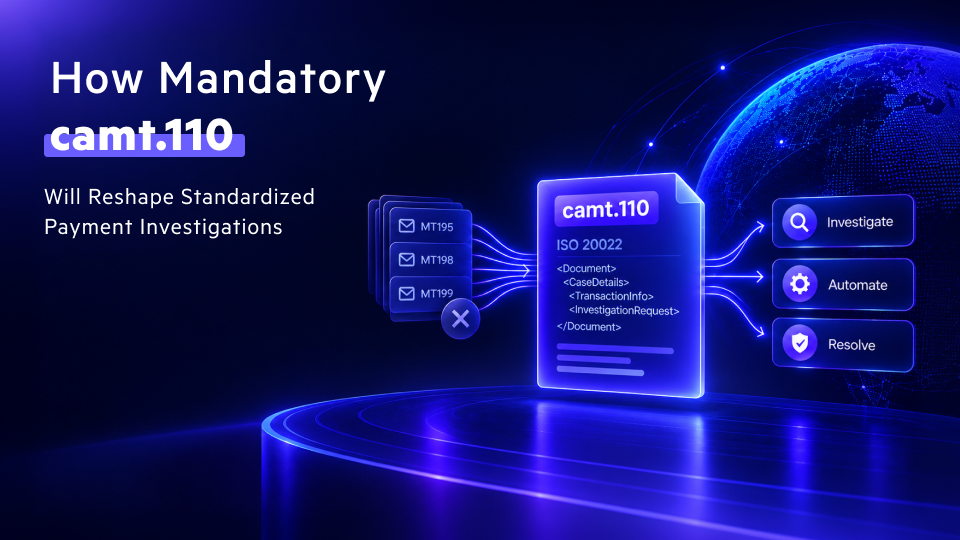
The industry’s push toward ISO 20022 brings much needed structure into payments. Richer data formats allow banks to automate parsing, validation, and decision routing. As more markets adopt this standard, investigations naturally benefit from cleaner information.
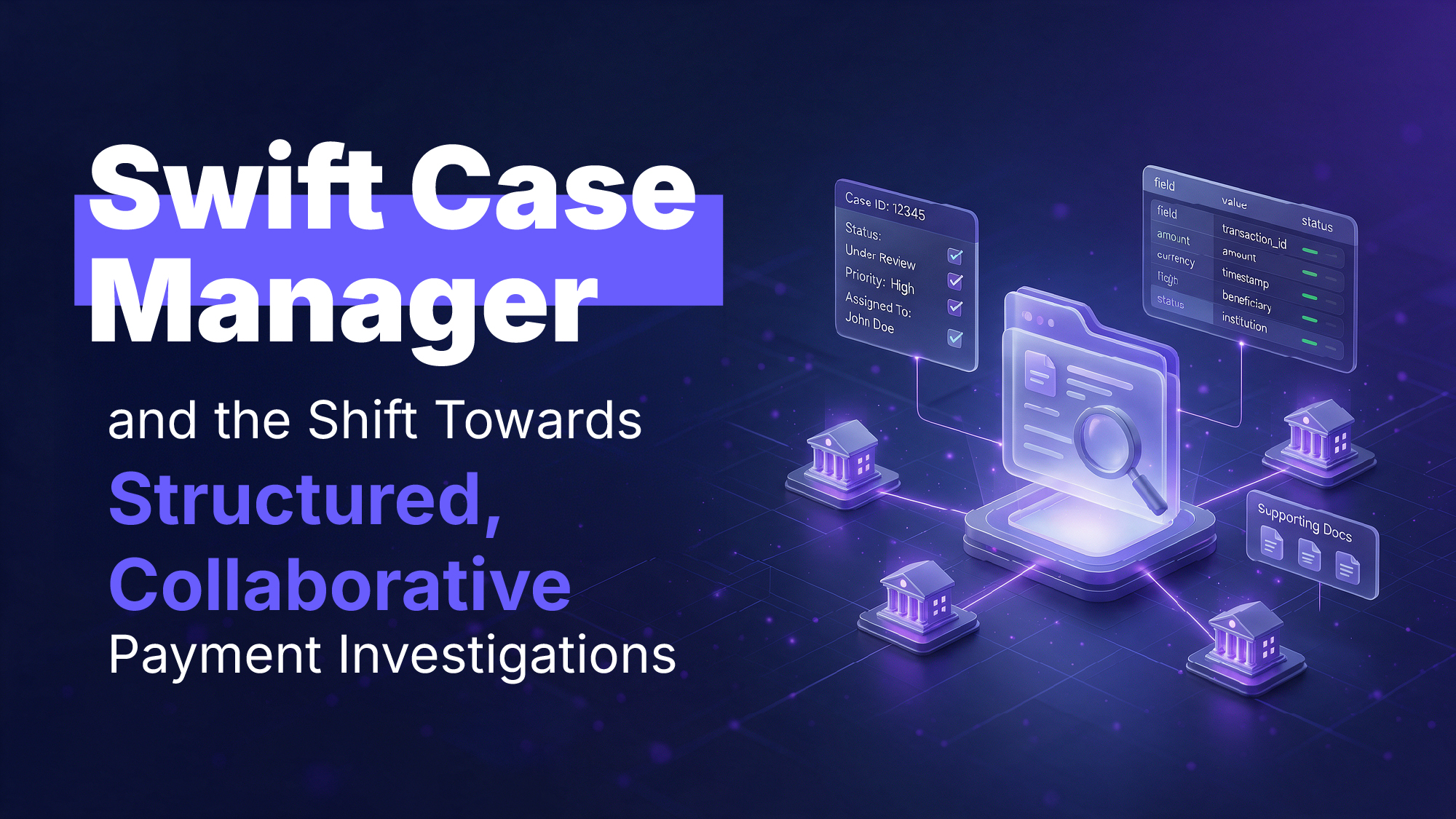
Case Orchestrator enhances the Swift gpi foundation by introducing shared workflows for managing exceptions. Instead of relying on free format queries, banks can now exchange structured case data. This reduces the back-and-forth that historically caused delays. The platform also enables escalations, handovers, and lifecycle tracking on a single shared interface.
Together, ISO 20022 and Case Orchestrator solve long standing pain points in investigations. With consistent data structures and pre-defined process flows, banks can streamline how analysts handle cases and reduce dependency on manual communication.
SWIFT gpi is transforming the landscape of cross-border payments by creating a more connected, transparent, and efficient ecosystem. With the adoption of ISO 20022 and platforms like Case Orchestrator, the industry is moving toward a future where payments are predictable, investigations are streamlined, and operational challenges are minimized.
This evolution empowers banks, corporates, and market infrastructures to operate with greater confidence and efficiency. SWIFT gpi is not just improving payments today; it is setting the foundation for a global payments system that is faster, clearer, and ready to meet the demands of tomorrow
https://www.swift.com/products/swift-gpi


.png)


.png)