.png)

.png)
The conversation around AI is shifting from “how fast code can be generated” to “how intelligently applications can be designed.” Enterprises are now looking for ways to create structured workflows, maintain governance, and support scalable application delivery.
With vibe coding in Pega Blueprint, AI becomes more than a coding assistant. It evolves into a collaborative design layer that helps organizations use natural language inputs throughout the process.
Vibe coding is an AI-driven approach to software design and development in which users express business intent in natural language, and the AI translates that intent into structured application components, such as workflows and data models.
In March 2026, Pega introduced vibe coding in Pega Blueprint to simplify and accelerate workflows.
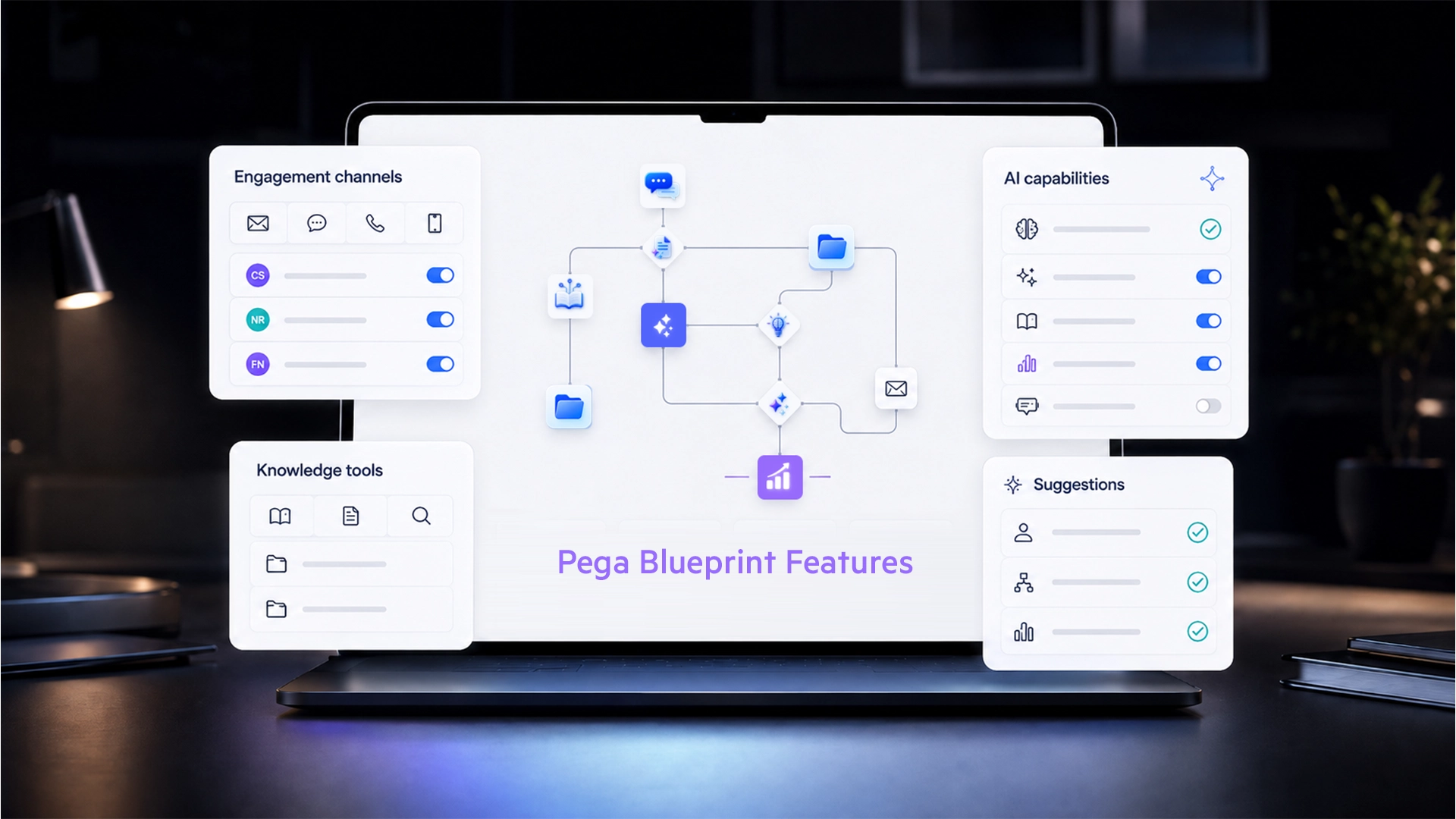
Pega Blueprint is a GenAI-powered tool that allows organizations to design application templates that help business owners to define and visualize the requirements. Once the template is ready, the organization can import it into App Studio for authoring. The inclusion of vibe coding in Pega Blueprint replaces complex code with structured, easy-to-manage, enterprise-ready workflows.
This conversational, AI-driven approach allows developers to use natural language to guide generative AI in creating applications, with a focus on intent. The users can seamlessly transition between coding and drag-and-drop modeling, providing flexibility.
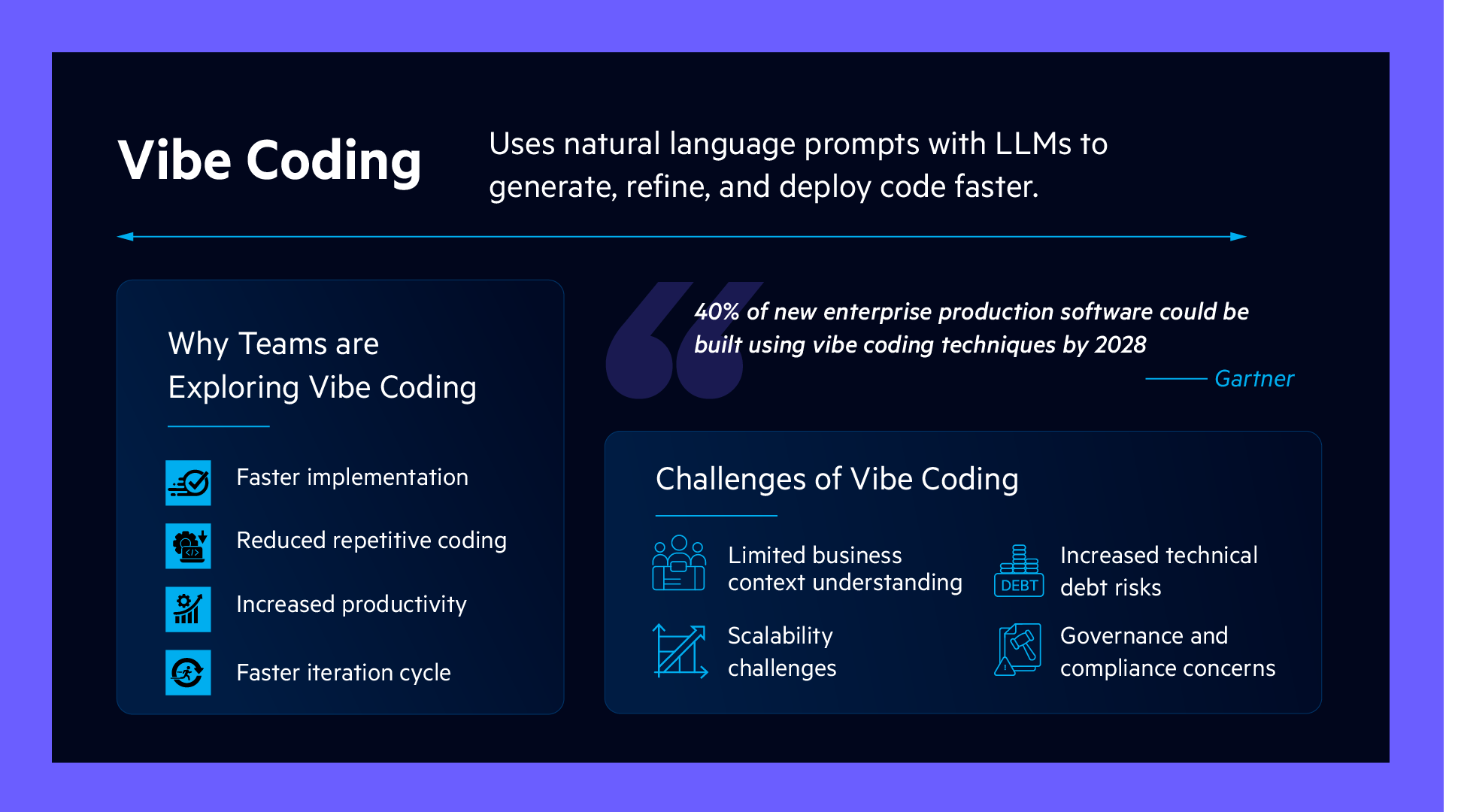
When scaled across organizations relying on legacy systems, vibe coding can introduce large volumes of error-prone code, increasing risk and compounding existing technical debt.
Most AI coding tools prioritize speed, often overlooking critical aspects such as business requirements, process optimization, and user experience.
Even when applications are built quickly, they must meet enterprise standards, ensuring they are governable, easy to understand, and capable of operating across complex systems while complying with regulatory requirements.
With Pega Blueprint, the concept is fundamentally redefined. It translates business intent into structured, implementation-aligned designs that directly support Pega application development.
For instance, we describe what is needed, and AI generates a result, but that result often lacks structure, continuity, and alignment with enterprise systems.
Enterprise application development has long faced a fundamental challenge: balancing speed with the need to create templates that align with business requirements and governance standards.
By leveraging Pega Blueprint capabilities, organizations can move away from fragmented workflows toward a unified, AI-assisted design approach that scales efficiently across teams and use cases.
Accelerating Development with Conversational AI
Using natural language (text or speech), business owners can move from concept to structured design in significantly less time. This includes everything from ideation and workflow refinement to persona identification.
Reduce the Accumulation of Technical Depth
Organizations can minimize technical debt by establishing structured, standardized designs from the outset. This limits rework and ensures applications are built on consistent, scalable architectural foundations.
Stronger Alignment between Business and IT
Pega Blueprint establishes a shared design foundation that directly translates business intent into structured workflows. This minimizes misinterpretation and ensures that what is built closely reflects the original business objectives.
Pega Blueprint’s evolution signals a broader shift in software development, from writing logic to an AI-driven solution. Vibe coding, when backed by enterprise-grade structure and governance, will become a competitive advantage.
At EvonSys, we help enterprises accelerate Pega application development by combining deep platform expertise with structured implementation approaches. From workflow design to deployment, we enable organizations to move from concept to execution faster and with greater alignment.
Reference:
Contact EvonSys Team

.png)


.png)