.png)

.png)
Business leaders don’t achieve operational success through task completion alone. They measure it by outcomes, such as complaints resolved or claims processed.
Still, teams spend their time managing broken workflows and complex exception handling rather than driving growth. Pega solves this challenge by treating work as a case rather than breaking it into multiple task-based processes. The AI-powered case management platform has been further enhanced in the latest upgrade.
In this blog, we break down the AI-powered case management enhancements in Pega Infinity ’25 and how they can help businesses drive measurable impact.
Pega treats each unit of business work as a separate case, often ad hoc and unpredictable, requiring data aggregation across multiple channels. It brings together all the elements needed to complete a unit of work, including data, tasks, decisions, documents, and interactions, within a defined lifecycle. Each case progresses through a series of stages and steps, while remaining adaptable to real-time inputs, business rules, and events. This dynamic approach enables organizations to manage both structured processes and complex, exception-driven scenarios within a single, unified framework.
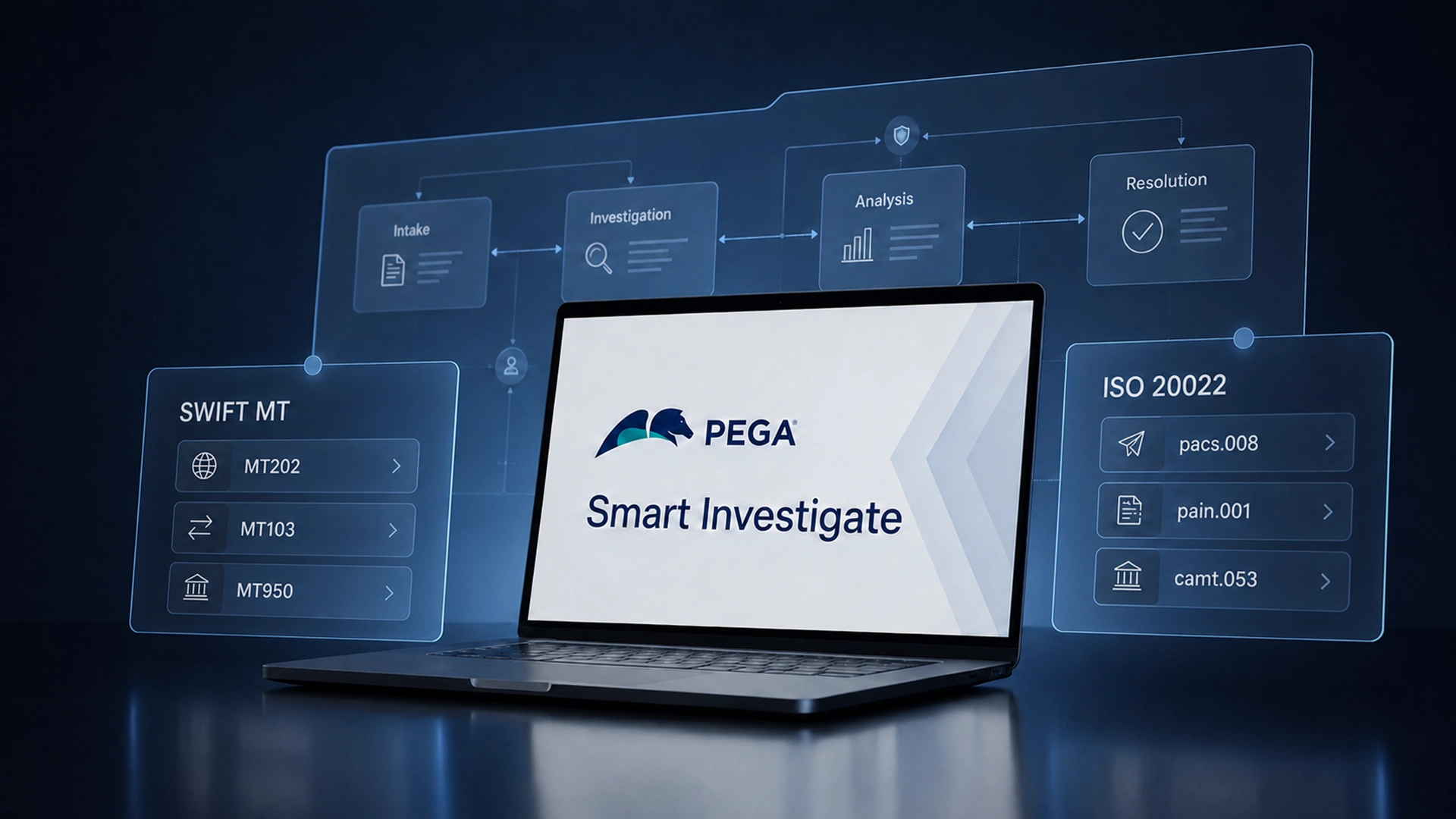
Consider a payment dispute in a banking environment. When a customer raises a complaint about an unauthorized transaction, it may initially seem like a straightforward process to resolve.
In a traditional business process, the workflow is predefined: log the received dispute complaint, verify the details, investigate, and resolve. However, dispute resolution typically involves multiple variables, including transaction type, regulatory requirements, customer history, fraud indicators, and third-party interactions, such as merchants or payment networks. These factors can add multiple steps to the workflow at any stage.
In Pega case management, the entire dispute resolution is treated as a separate “case” that can evolve dynamically. This enables the system to:
This level of flexibility ensures that each dispute is handled based on its unique context, rather than being constrained by a pre-defined workflow.
As a result, organizations can accelerate resolution times, ensure regulatory compliance, and better handle workflow exceptions.
GenAI-driven automation enables capabilities such as conversational agents, prompt-based case creation, and AI-powered workflow execution directly within the case lifecycle. Here are some of the major updates across the platform:
GenAI-powered Enhancements in Pega Infinity ’25
Pega Infinity ’25 introduces two new rule types, Agent Rules and Tool Rules, to operationalize Gen AI within case workflows in a more structured and reusable way.
Agents: They can understand context, interpret inputs, and take actions within a case. Inputs can be unstructured, such as documents (e.g., a PDF report uploaded for analysis) and user-submitted content (e.g., complaints through chat or email). The agent can generate summaries and provide recommendations.
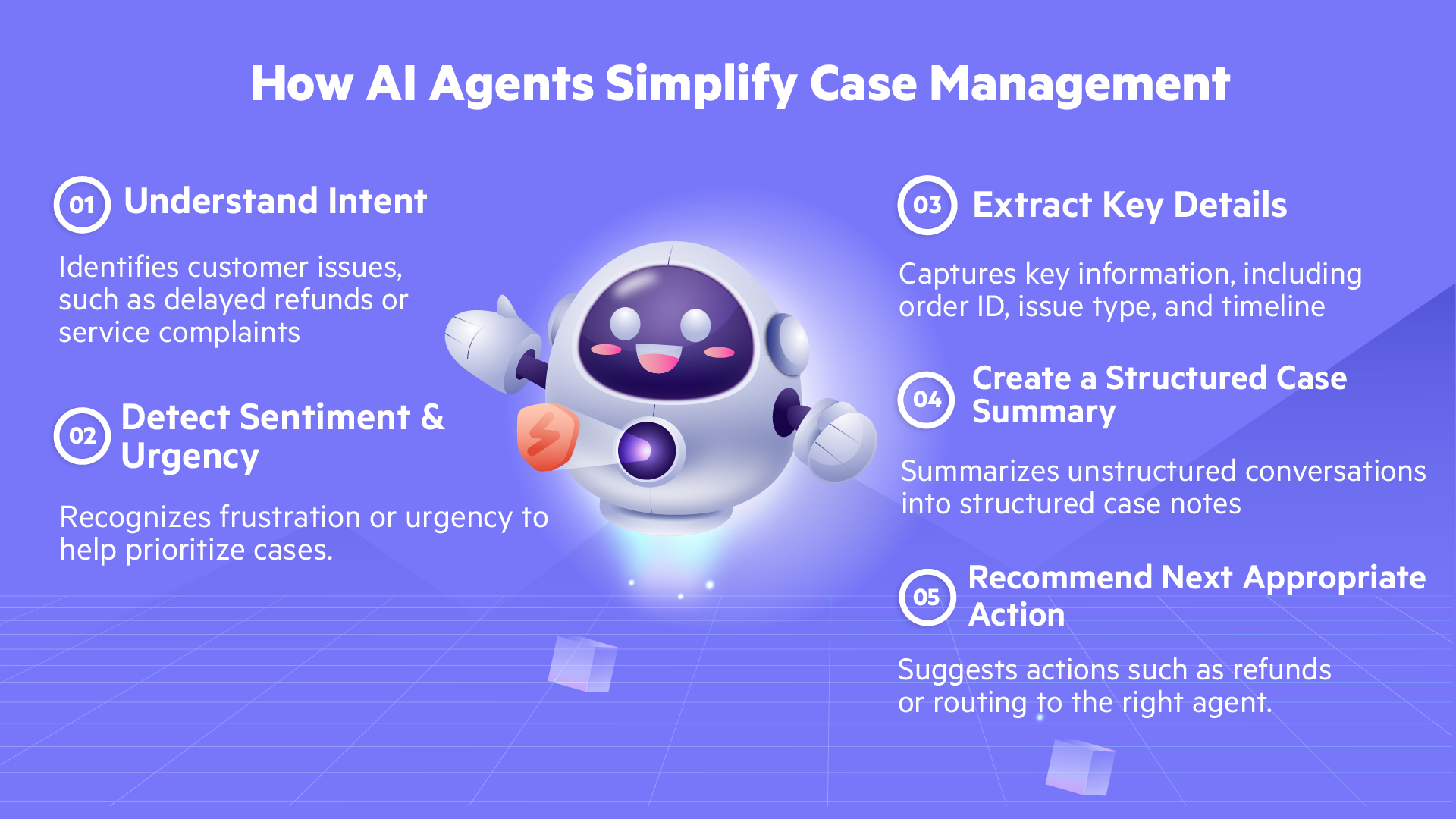
Tool Rules: They define the specific actions or operations that an agent can perform within a case. These actions can include retrieving data, updating case fields, initiating workflow steps or case actions, or integrating with external systems. Tool rules act as reusable functional components that agents invoke when they determine an action is needed based on the user's request and case context.
For example, when an agent uses information extracted from a complaint or document, it can use tool rules to fetch historical data, validate transaction details, update the case status, or initiate the next step in the workflow.
Conversational AI for User Guidance and Assistance
Pega Infinity ’25 enhances case management with built-in conversational AI capabilities that provide real-time guidance to users throughout the case lifecycle. Users can interact with the system using natural language to ask questions, retrieve case information, and receive contextual suggestions. The conversational interface helps users understand next steps, navigate workflows, and complete tasks more efficiently. By embedding this assistance directly into the user experience, Pega reduces training effort, minimizes errors, and improves overall productivity.
Simplifying Case Relationships with the New Hierarchy Widget
Pega Infinity ’25 introduces a blended architecture that enables traditional UI-based cases and Constellation-based cases to coexist within the same application. With this enhancement, you can now establish parent-child relationships between cases across different UI frameworks.
For example, a case built using the modern Constellation UI (parent case) can include a child case created using the traditional UI. This ensures continuity while still leveraging new capabilities. This approach is particularly valuable for organizations undergoing digital transformation. Instead of migrating everything at once, teams can gradually transition from traditional UI to Constellation, reusing existing case types while incrementally modernizing their applications.
By combining dynamic case lifecycles with GenAI-driven capabilities, organizations can move beyond rigid workflows and adapt to real-world complexity. To fully unlock the potential of these advancements, organizations need the right implementation strategy and expertise. EvonSys helps enterprises design, modernize, and scale AI-powered case management solutions tailored to their business needs.
Reference:

.png)


.png)