.png)

.png)
Volunteer scheduling often seems manageable at first. A shift sheet, a few email threads, and a shared calendar can feel like enough to keep things moving.
The cracks usually show up when the event begins. A few volunteers do not arrive. Others turn up at the wrong location or are assigned to roles they were not prepared for. Confirmations are buried in email threads, the latest updates are easy to miss, and the shift sheet that looked workable a day ago is already out of date.
At the registration desk, there are fewer volunteers than expected, so the team starts making last-minute changes. Calls and messages go out in real time to fill gaps and keep things running. The event moves forward, but not without confusion, delays, and unnecessary pressure on the people trying to coordinate it.
For many nonprofit teams, this is not unusual. It is what volunteer scheduling looks like when the process depends on disconnected tools that were never built for real-time coordination.
Most of us start with a volunteer shift sheet because they are familiar, flexible, and free. But they weren’t built for the complexity of real-world volunteer scheduling.
Scheduling isn’t just about filling slots. It’s about aligning people with the right skills for the right task, based on their availability and timing, through proper communication and real-time updates. The challenges you face while using shift sheets are:
Volunteers might cancel at the last minute or not show up at all. Most shift sheet systems assume they will attend. When someone cancels just before a shift, the sheet doesn’t automatically update, leaving a gap between the actual status and what it shows.
Most shift sheets are not integrated with communication channels such as Email, WhatsApp, or phone calls. This could result in:
To resolve the communication gaps, the coordinators need to cross-check multiple platforms and send individual follow-ups.
Using the volunteer shift sheet, the team has to deal with administrative bottlenecks, double bookings, and last-minute cancellations. Volunteers cannot update their own availability on spreadsheets, forcing coordinators to act as intermediaries for all changes. Without live updates or automated reminders, shifts may be left with fewer volunteers.
Take time to ask yourself: Is your current volunteer scheduling process helping or quietly hurting your events, your volunteers, and your mission?
To move beyond manual scheduling coordination, nonprofits need a system built around how volunteer programs actually operate. Automated software can proactively match volunteers to the right roles, adapt to changes in real time, and keep everyone aligned without the usual coordination overhead.
EvonSys’ Volunteer Management is built to simplify how nonprofits manage volunteers. Instead of relying on static shift sheets, it brings together:
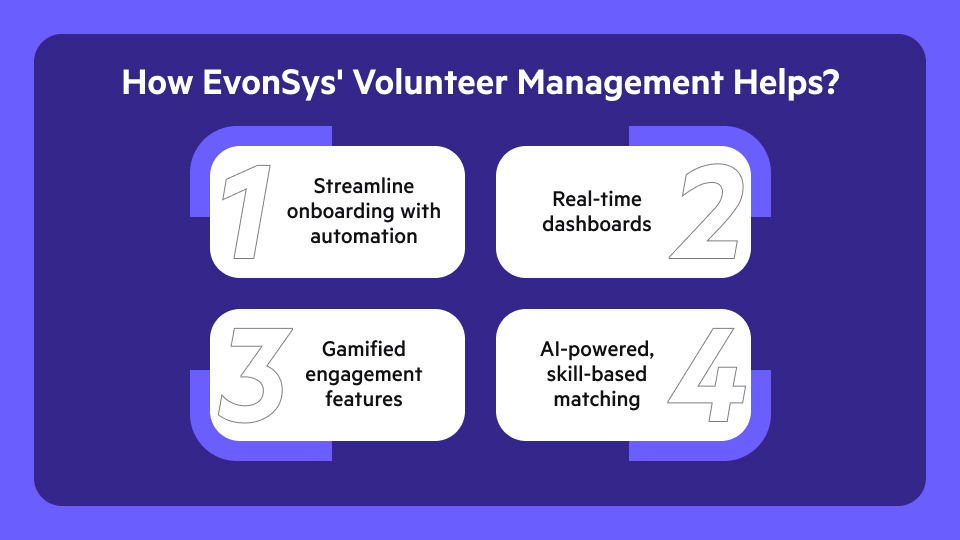
Together, these capabilities transform volunteer management from a manual process into a structured, intelligent system that supports scale, engagement, and impact.
Discover how EvonSys simplifies volunteer management

.png)


.png)