.png)

.png)
Every organization running Pega at scale eventually faces the same question. Do you build your own platform support team, outsource it to a Pega managed services provider, or run a hybrid of the two? It is a genuinely consequential decision, and it deserves an honest evaluation rather than a sales pitch.
This blog walks through all three options with their real trade-offs, so you can reach your own conclusion.
A mature internal Pega support team has clearly defined role boundaries:
It runs on documented runbooks, defined response procedures, and a structured on-call rotation that does not burn people out. Observability tooling is in place, actively tuned for the Pega environment, and used proactively, not treated as an alert inbox. The team participates formally in change management and produces regular platform health and capacity reports. That is the standard to measure against, and reaching it is harder than it looks.
Pega platform support demands a combination of skills that does not naturally exist in one person. Teams need Pega application knowledge, cloud infrastructure experience, JVM and middleware expertise, and operational discipline around monitoring and incident management. Teams that grow organically tend to develop depth in one area and gaps in the others, strong on the application side but thin on infrastructure, or the reverse.
When one or two senior people leave, the institutional knowledge of the platform's history, customizations, and known failure patterns leaves with them. Rebuilding it takes time that business rarely has.
The visible costs are hiring people and investing in tools. The hidden costs are harder to quantify but often larger:
Internally, 24x7 almost always means an on-call rotation where someone is reachable and able to respond at any hour. The quality of that coverage depends heavily on how well the team is supported.
Without that investment, on-call degenerates into reactive firefighting, and individuals burn out faster than the business notices.
A hybrid model works well when the organization wants to keep internal ownership of Pega application development and architectural direction, while outsourcing the operational burden of 24x7 monitoring, incident response, and routine platform management. It suits teams that are strong on Pega development but lack the infrastructure and operational expertise. It is also a good fit when 24x7 requirements exceed what the internal team can sustain without significant headcount growth.
Before you decide, weigh these six factors honestly:

Walk honestly through all three options and a pattern emerges. Building internally is achievable, but expensive, slow to mature, and structurally exposed to attrition and on-call fatigue. Outsourcing trades some flexibility and initial context for immediate maturity, predictable cost, and coverage that does not depend on individuals. The hybrid model captures much of both.
For most Pega environments, a hybrid or outsourced support model delivers the strongest balance of operational resilience, expertise, and cost efficiency. It allows internal teams to focus on business priorities while a specialist partner provides the expertise to sustain in-house.
If the evaluation above points toward outsourcing or a hybrid model, the next question is which partner closes the gaps a generic MSP or Pega systems integrator leaves open.
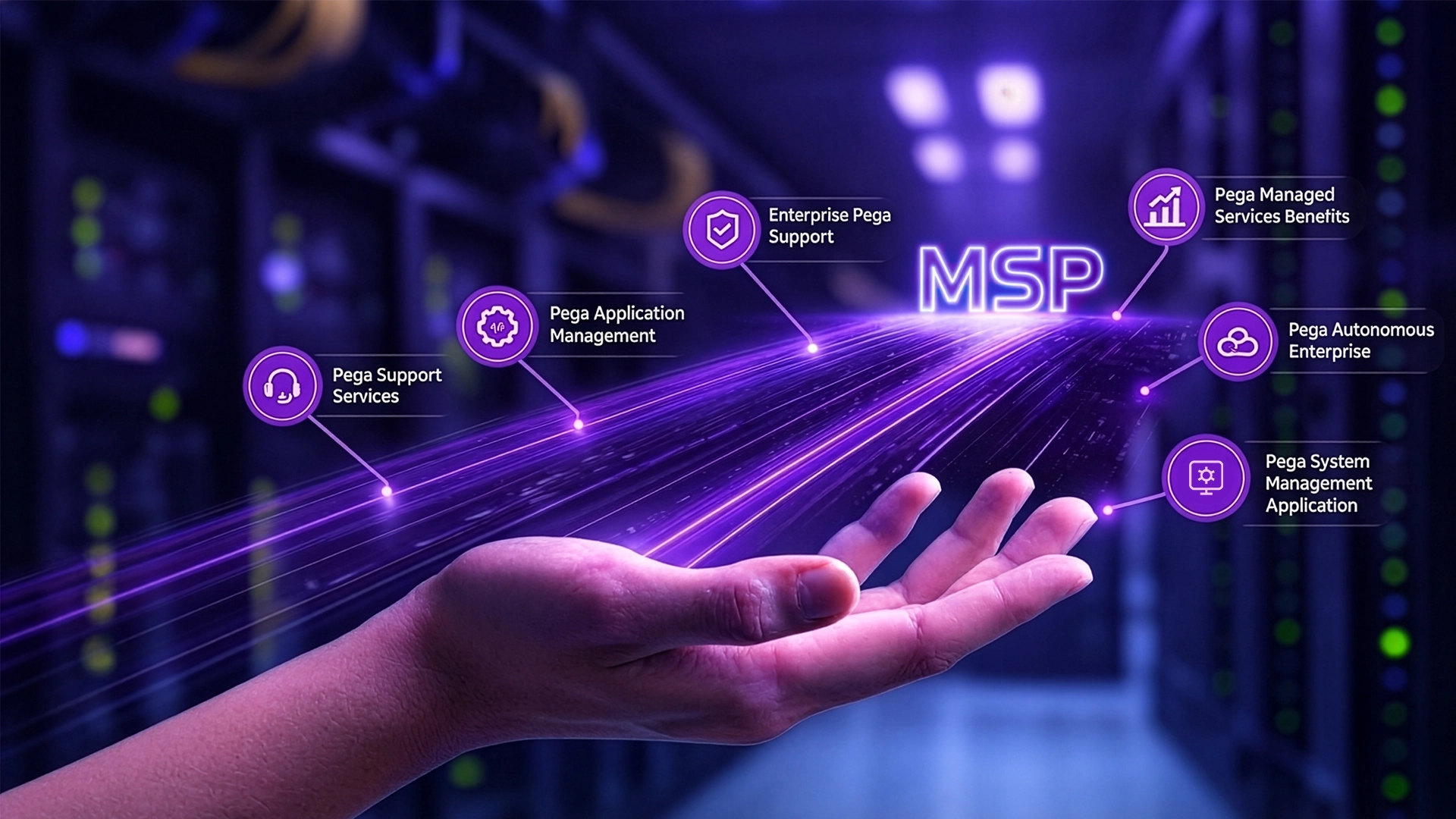
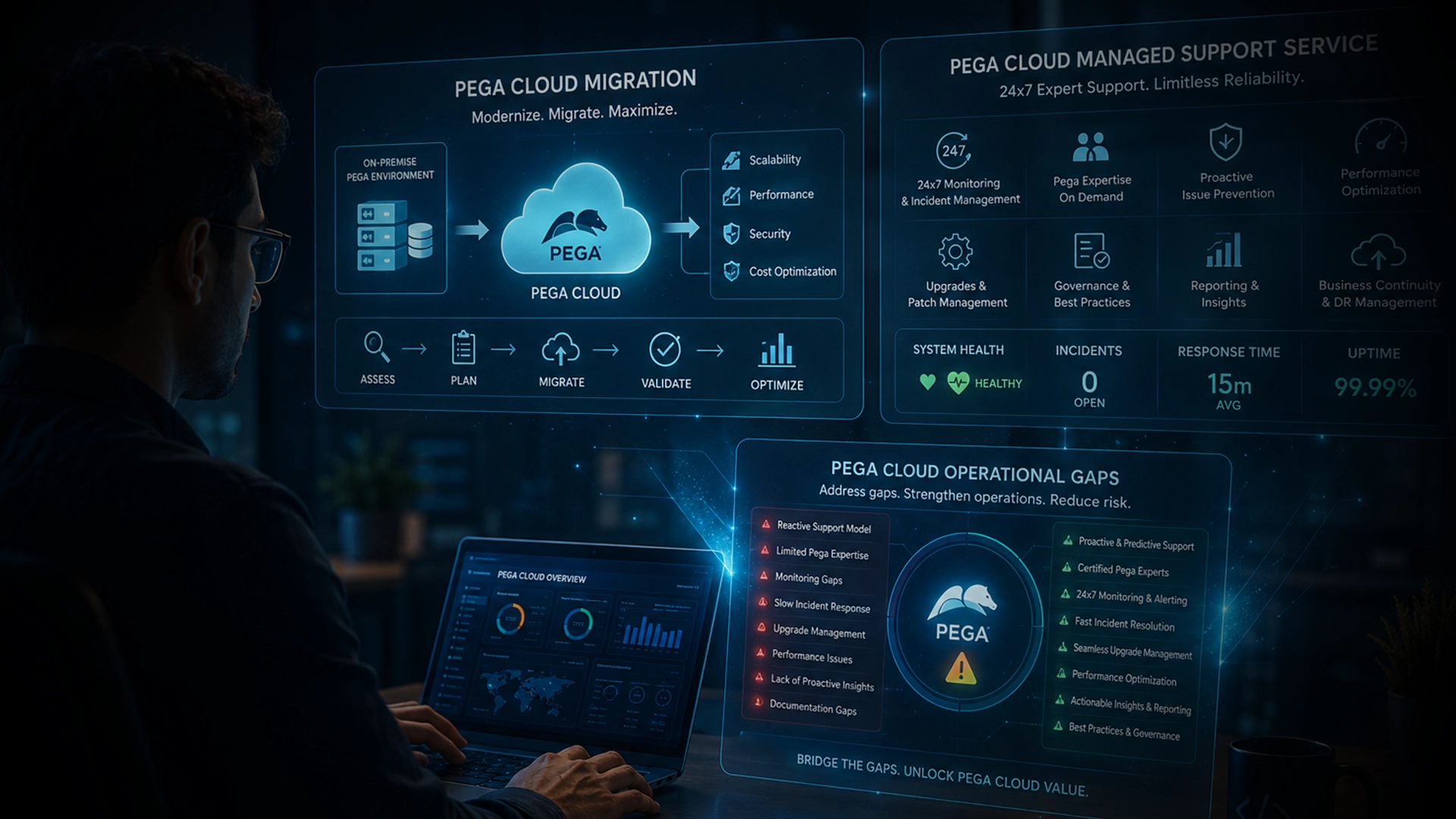
EvonSys is a Pega-native managed services provider, not a generalist MSP that treats Pega as one more platform, and not a Pega SI that implements the platform and hands off operations to someone else. Pega platform expertise, SRE-grade reliability engineering, and multi-cloud operations are combined into a single accountable engagement, with SLAs you can hold us to.
This directly addresses the risks raised earlier in this article:
Still Weighing Build vs Outsource?
We can help you assess the operational trade-offs and identify the right model for your environment.

.png)


.png)