

.png)

.png)

Most Pega cloud migrations end with the same messages, like, all workloads have cut over, users are in, and the project is closed. Teams have every reason to treat that message as the finish line. There are workstreams, cutover runbooks, and rollback planning that have led up to this point, and it is forcing us to read "migration complete" as "problem solved."
But it rarely is, and the Cloud buyers say so themselves. IDC's Cloud Pulse Survey found that 60% of organization said their IT infrastructure requires major transformation, while 82% reported that their cloud environment still needs modernization even after their initial migration. Pega environments follow the same pattern. A migration can be executed well, and the platform can still be nowhere near properly operated a few months later.
Go-live is the start of the operational phase, not the end of the project. The environment that was carefully migrated now must run day and night in a place where the old on-premises habits and safety nets no longer apply. This is where the operational gap opens the space between a platform that has been moved to the cloud and the platform that is actually being operated well in the cloud.
Across post-migration Pega environments, the same gaps appear again. They are not caused by a bad migration but by the operational responsibilities that the migration project was never scoped to cover. Taken together, they are the most common Pega cloud migration challenges organizations run into once real users and real transaction volumes hit the platform.
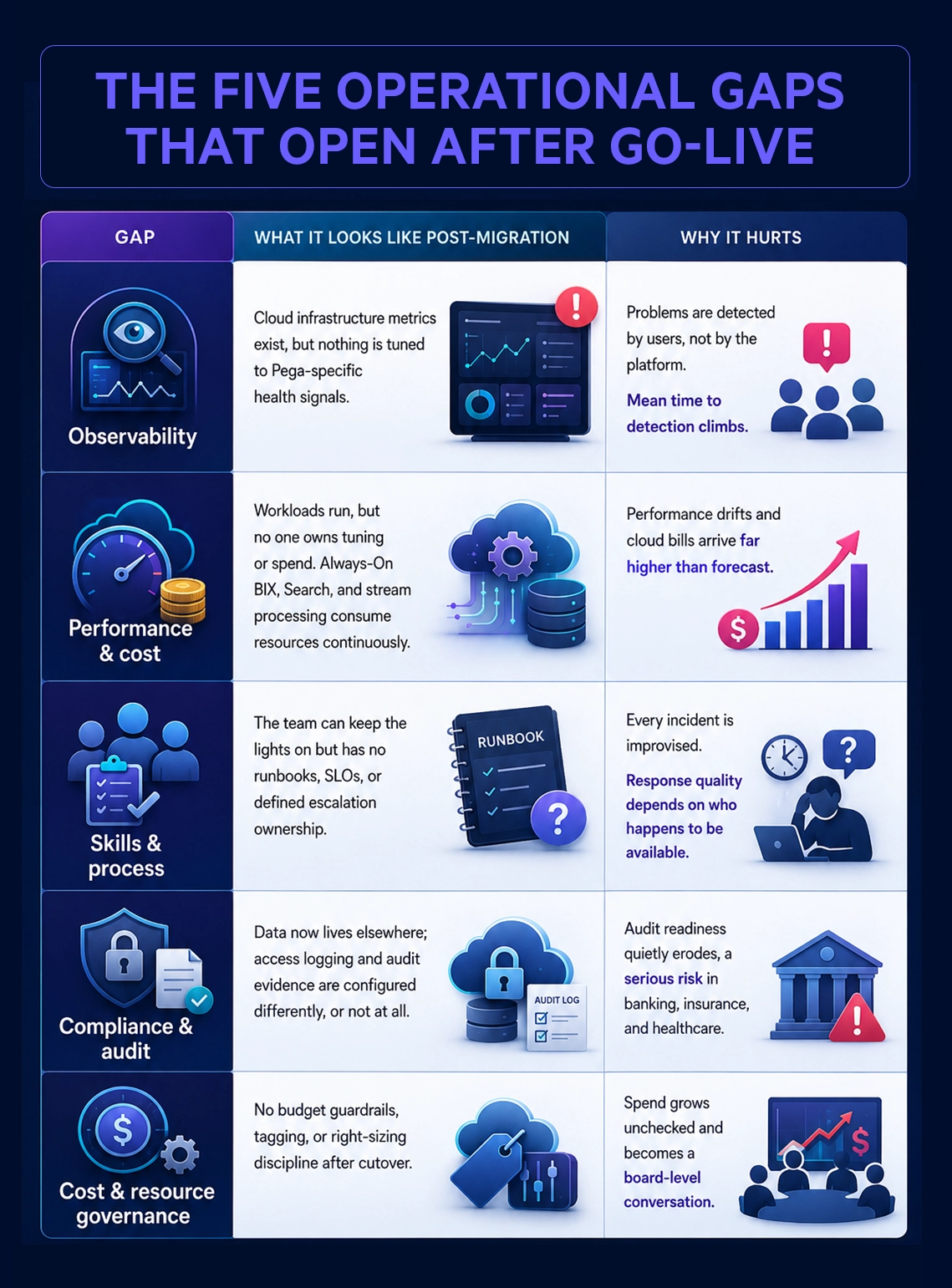
Of all the post-migration gaps, cost is the one that most often reaches the executive floor. This is not something unique to Pega.
Pega workloads add their own pressure on top of that baseline. Always-On BIX, the Search service, and internal messaging and stream processing all generate continuous infrastructure consumption.
Without proper governance, such as tagging resources, right-sizing them, and monitoring costs, a migrated platform can quickly lead to unexpected cloud expenses within the first few billing cycles. An unexpected cloud bill is not just a finance problem, as it undermines confidence in the entire migration.
It is tempting to describe the post-migration shortfall as a "skills gap," but that undersells it. IDC estimates that more than 90% of organizations will face IT skill shortages by 2026, at a projected global cost of around 5.5 trillion dollars. However, hiring more people does not solve the problem. What is often missing is the operational foundation that enables teams to run the platform effectively, including:
These elements distinguish a team that simply reacts to incidents from one that proactively operates and continuously improves the platform.
Closing the gap means putting the operating model in place that the migration project never included. For a managed service buyer, it is worth being specific about what "good" looks like for each control:
These six controls are essentially the key Pega cloud operational gaps that organizations often discover after a migration project closes and day-to-day operations begin.
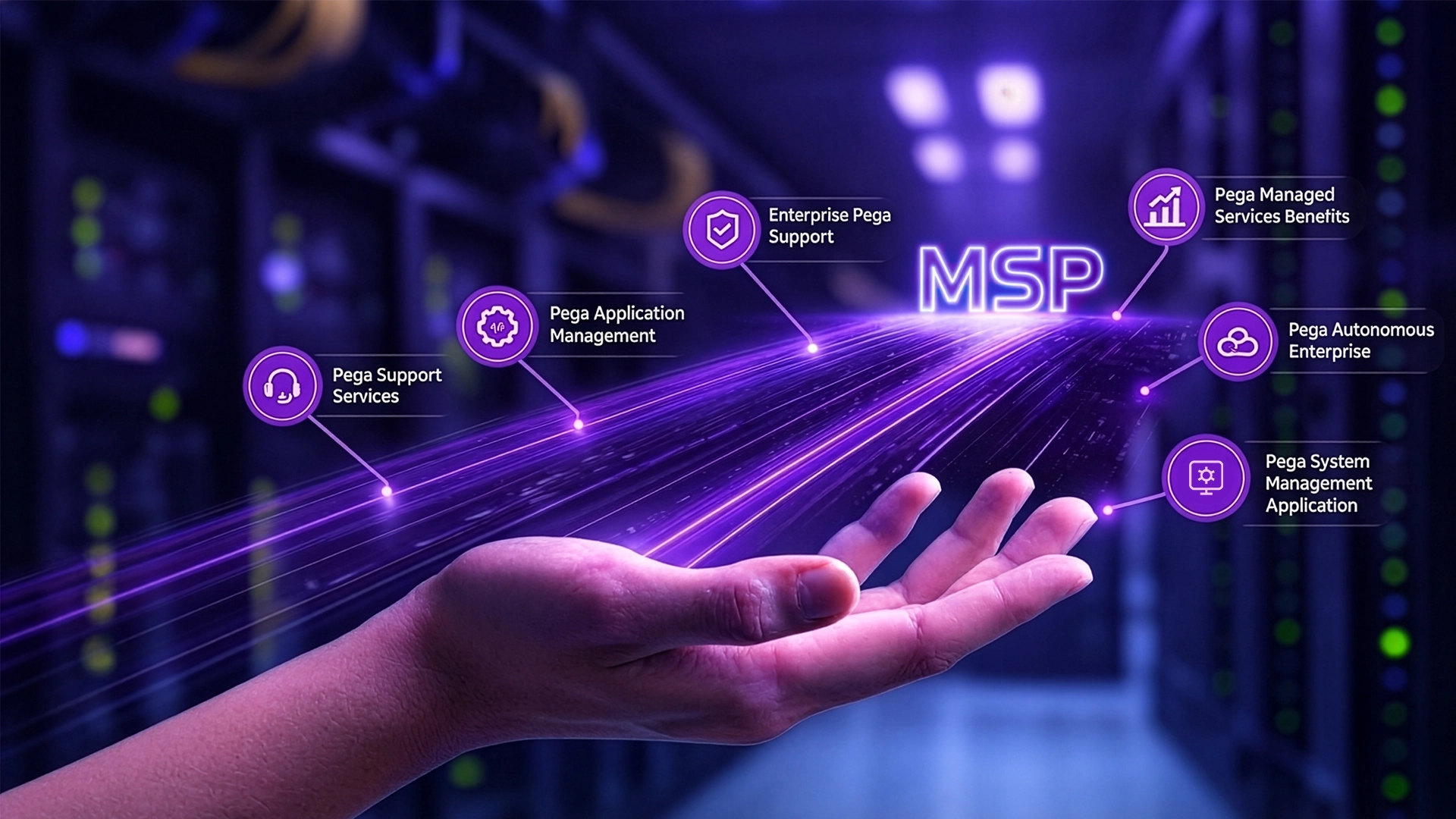
This is the kind of gap a Pega Specialized Partner is meant to close. EvonSys runs a Pega Cloud Managed Support Service built specifically around this post-migration phase, so the platform is being watched, tuned, and supported by people who understand Pega itself, not just cloud infrastructure in general. For organizations still figuring out who is responsible for observability, performance, or compliance after go-live, that means fewer surprises and faster incident resolution. Establishing a clear operating model in advance is better than trying to build one from scratch under pressure
Have you migrated Pega to the cloud but not yet closed the operational gap?
Talk to us about your post-migration operational review and see where your environment stands against these gaps.

.png)


.png)



.webp)
