.png)

.png)
"24x7 support" is one of the most reassuring phrases in a managed services contract, but it is often misunderstood. Many buyers often picture a full team working throughout the night. The reality is more nuanced, and the nuance is what sets providers apart.
The first misunderstanding is about coverage. 24x7 support does not mean a full team is actively working all day and night. It means coverage is available at any time. Some providers offer on-call response with a reachable engineer available without active monitoring, while others have a dedicated Network Operations Centre (NOC) that continuously monitors platform health. These are fundamentally different operating models, and buyers rarely ask which one they are getting.
The second misunderstanding is about what support includes. Customers often assume managed support includes application changes, enhancements, or bug fixes that need development work, which is not true. Managed support keeps the platform healthy, stable, and available. Anything that touches application code or business logic is a separate engagement. Confusing the two is a common source of friction after signing.
A mature Pega application support service focuses on maintaining platform stability, availability, and performance through clearly defined operational responsibilities.
Continuous platform health monitoring across infrastructure, application, database, and integration layers.
Comparing Pega support services on paper is rarely enough. The operating model, engineering depth, and governance process ultimately determine how effectively incidents are managed.
Reactive support responds after something goes wrong, like an alert fires, a user reports an issue, or a threshold is breached. It is necessary, but on its own it is not enough. Proactive support works ahead of incidents through continuous Pega monitoring, trend analysis, capacity planning before workloads grow, pre-emptive patching, and regular health reviews that surface risks before they reach users.
The ratio of proactive to reactive activity is one of the clearest indicators of how mature a support operation really is. A predominantly reactive model means the platform is running the team, not the other way around.
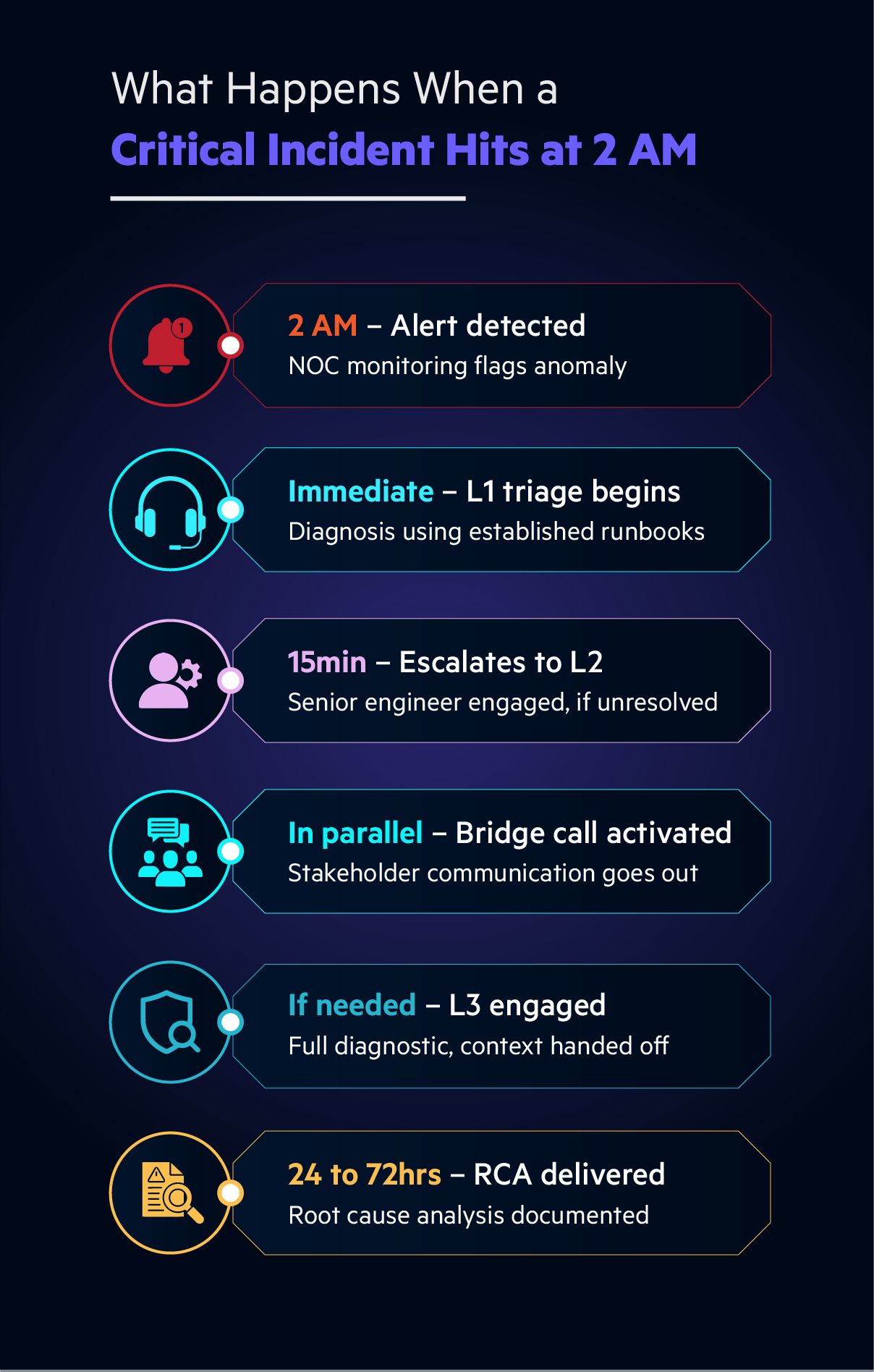
The NOC is the continuous monitoring and first-response function. It watches platform health around the clock, manages the alert queue, performs initial triage, and ensures escalation paths are followed correctly and on time. It does not perform deep diagnosis, which is Platform Engineering’s role. It does ensure nothing goes undetected and that the right people are engaged at the right moment.
Not every provider runs a dedicated NOC. Some rely on shared on-call models, which can introduce real inconsistency in response quality, particularly during off-hours.
Routine OS and middleware patching is typically included and follows a defined schedule, commonly monthly windows with formal change control approval. Pega hotfixes are assessed regularly and applied through controlled change where they address known platform risks. Major Pega version upgrades, however, are not part of standard managed support. They involve significant testing, dependency analysis, and often application-layer change, making them project-scope work delivered separately. Buyers should confirm this distinction clearly before signing.
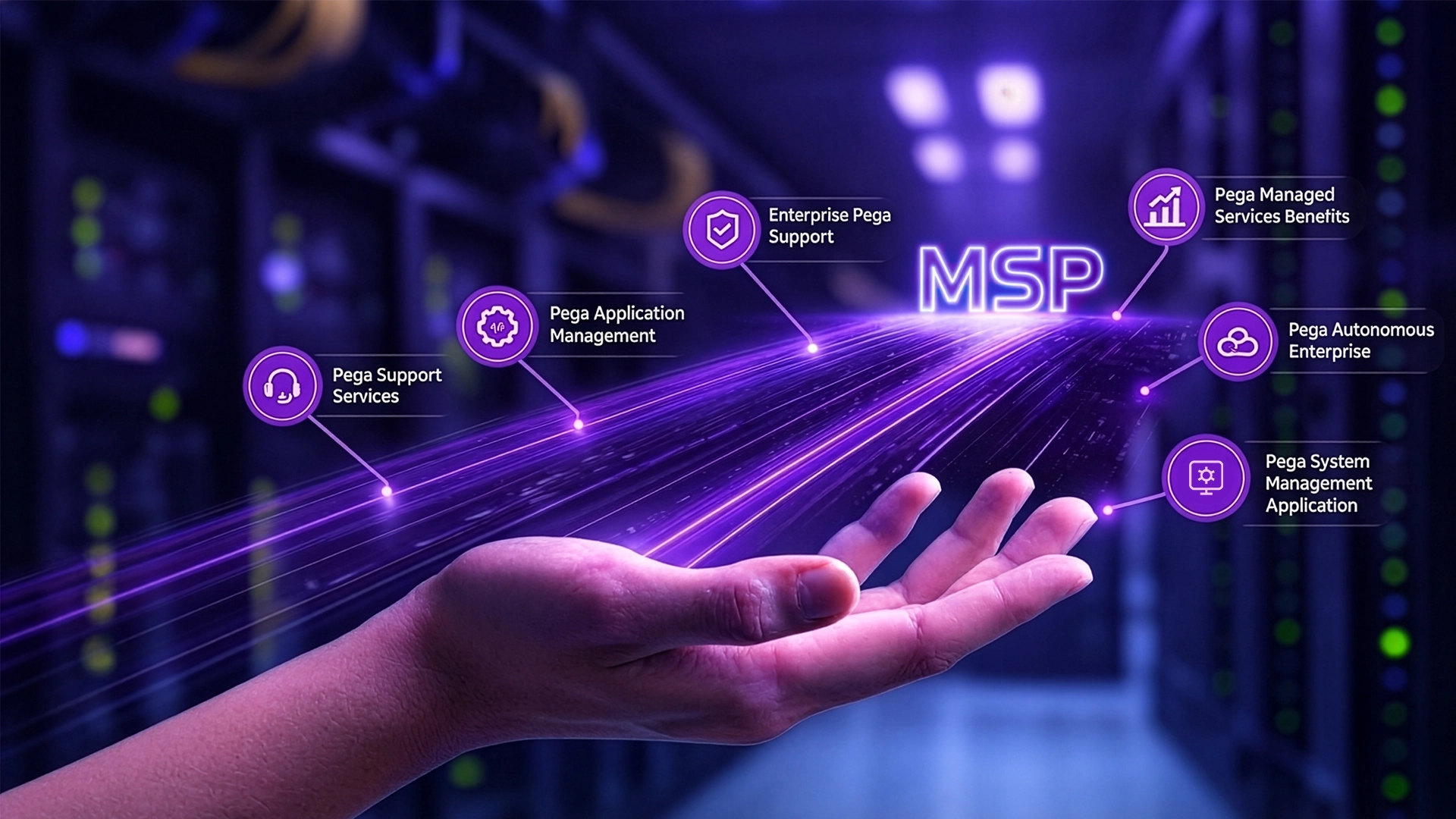
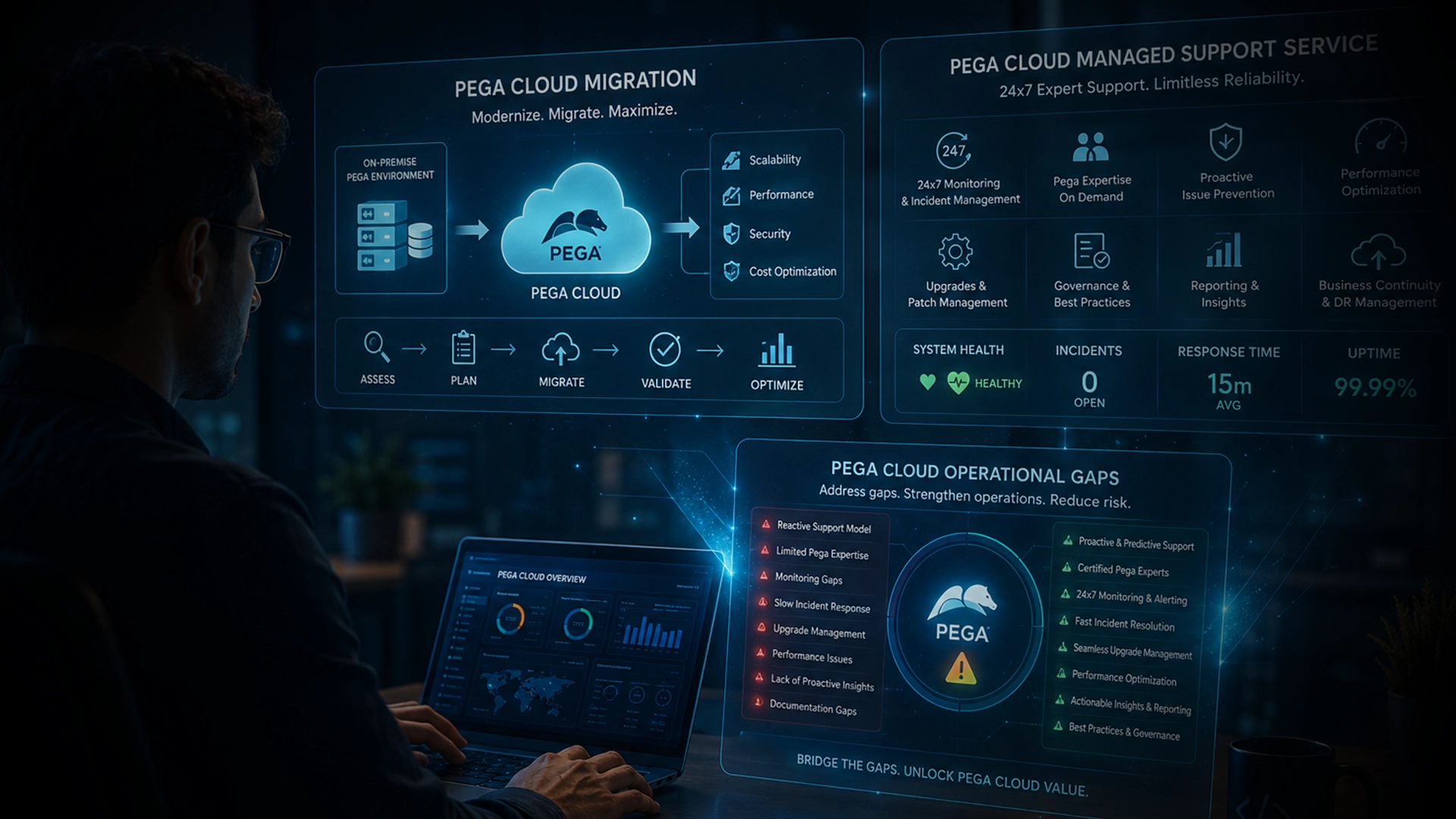
EvonSys delivers 24x7 Pega managed support through a structured operating model focused on platform stability, rapid incident response, and proactive operations. Our services combine continuous monitoring across PDC, Datadog and Dynatrace, defined support tiers, SLA driven incident management, routine health checks, patch management, and governance that aids organizations keep their Pega environments secure, available and performing at their best.
Looking for a Pega Managed Service Provider?
Backed by deep Pega expertise, we work as an extension of your team to reduce downtime, improve operational resilience, and support as your business needs evolve.

.png)


.png)