Live webinar | Seconds to Settle, Weeks to Resolve: The Payment Investigations Paradox
Register Now


A Pega environment operating at Level 1 or Level 2 maturity is not simply under-monitored. It is absorbing costs that are difficult to see until they become unavoidable, such as extended incident resolution time, case processing backlogs that built up overnight, JVM degradation that took three days to trace back – issues Pega-aware monitoring would have caught in hours.
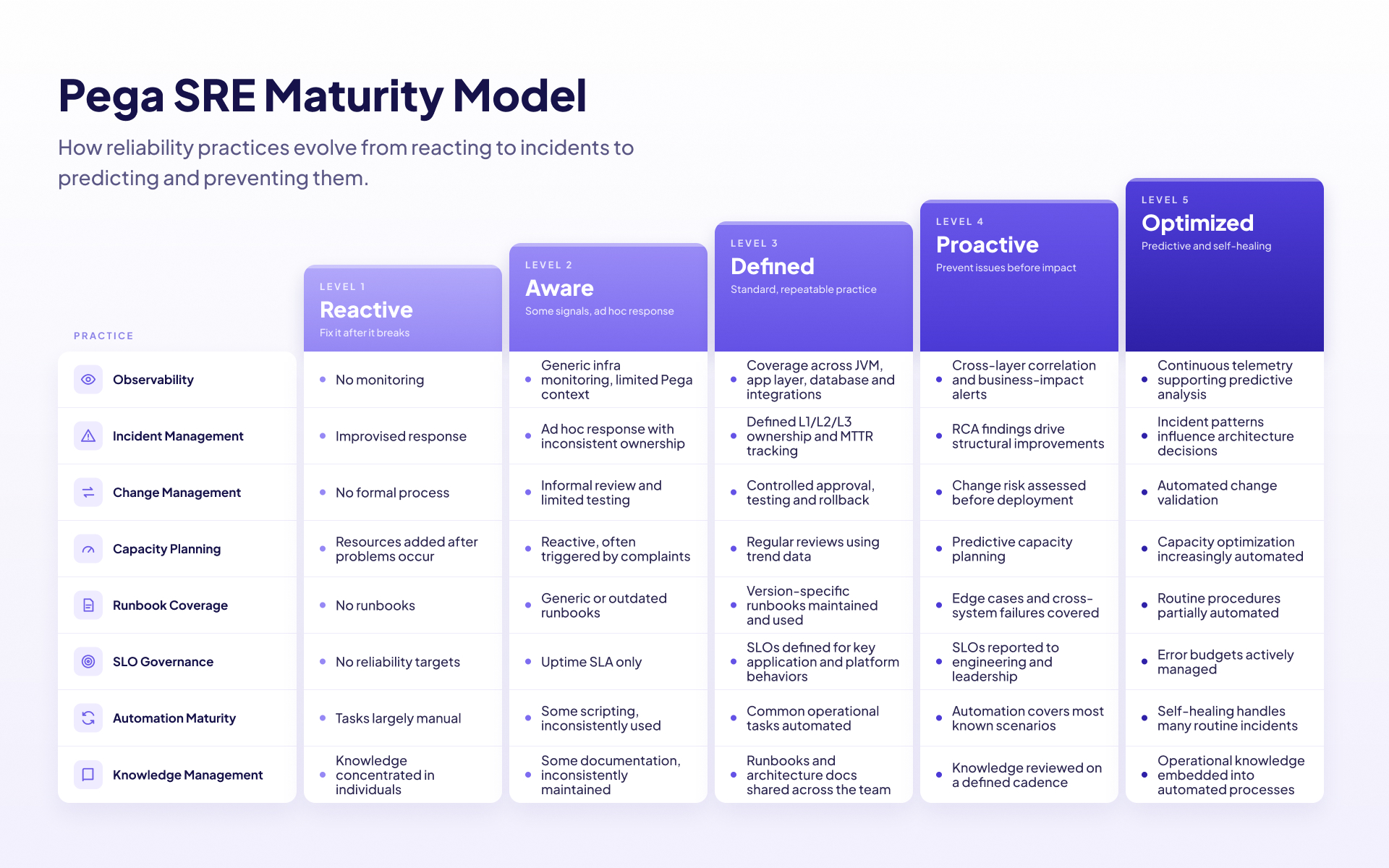
EvonSys Pega SRE Maturity Model gives enterprise teams a capability-by-capability way to assess how reliably their Pega environment is being operated across Pega Cloud, on-premise, and legacy environments.
It covers how to benchmark your platform's current position, what the cost of operating below a defined maturity threshold looks like in practice, and what it takes to move up the curve.
Generic SRE maturity frameworks miss the operational characteristics that drive reliability risk in Pega environments. Below are the characteristics that are worth understanding before benchmarking.
Pega applications rely on internal components such as requestor sessions, queue processors, job schedulers, agents, integrations, and data flows. Agents are a legacy construct, largely replaced in Pega 8+/Infinity by Queue Processors for asynchronous processing and Job Schedulers for time-based processing.
PDC, for example, is known for surfacing Pega Alert Log codes (PEGA000x), health indicators, exception tracking, and database query analysis.
Pega Cloud, on-premise, and legacy environments provide different levels of infrastructure access and carry different operational responsibilities. A maturity model that treats all three as equivalent needs to account for the environment being assessed.
Pega environments can also be in transition as organizations adopt newer platform capabilities and UI architectures. During these periods, monitoring, change management, testing, and incident processes need to account for the systems and components that are changing alongside the application.
Reliability maturity is not a single score. An organization may have mature incident management but weak capacity planning, or strong observability but limited automation.
The model therefore evaluates eight operational capabilities across five maturity levels. Use it as a capability-by-capability assessment rather than assigning one overall maturity score.
The maturity level matters because operational gaps eventually translate into production impact.
Requestor sessions can contribute to memory pressure and application degradation when session lifecycle behavior is not properly managed. Diagnosing these issues becomes harder when teams lack visibility into session-level behaviour and established troubleshooting procedures.
These failures stop business processes without generating a visible error signal. The operations team discovers the problem only when business users report that cases are not moving forward, at which point the processing backlog is already significant. This failure mode is typically invisible to generic infrastructure monitoring, and even Pega-native tools like PDC require the right alerts to be tuned and actively watched to catch it before backlogs build.
Database hotspots from Pega-specific query patterns are consistently misdiagnosed at Level 1 and Level 2. Pega generates complex database queries through its rule resolution and case management engine, and the load profiles differ across versions. Generic database monitoring flags slow queries but cannot correlate them back to Pega rule execution, case volume patterns, or BIX extraction activity. Without Pega-aware monitoring, tuning efforts address the symptom rather than the cause.
Beyond these three failure patterns, knowledge concentration is the risk that does not appear in any monitoring dashboard. When platform knowledge sits with one or two engineers and those engineers are unavailable during an incident, response capability drops significantly.
In legacy environments where customization context is particularly hard to reconstruct, this creates an incident that takes far longer to resolve than it should.
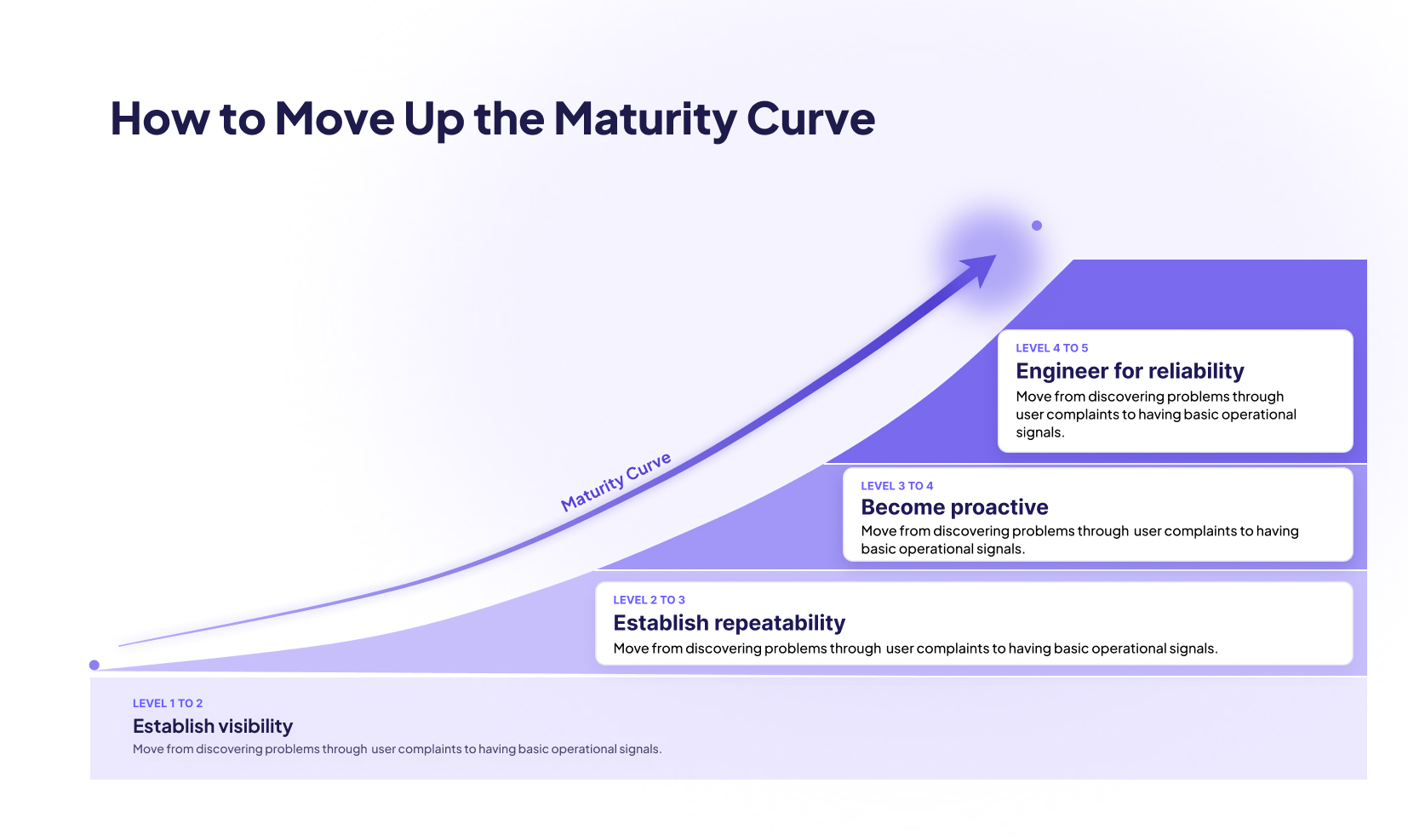
The tooling required at each stage will vary by deployment model. PDC, Datadog, Dynatrace, and other platforms can contribute to the operating model, but the maturity gain comes from how teams use those capabilities, not from the tools alone.
Building SRE maturity organically takes time, and the platform carries real business risk throughout that journey. Working with a Pega-native MSP changes that from Day 1. The business outcomes enterprises see when moving from a reactive internal model to a managed operations engagement include:
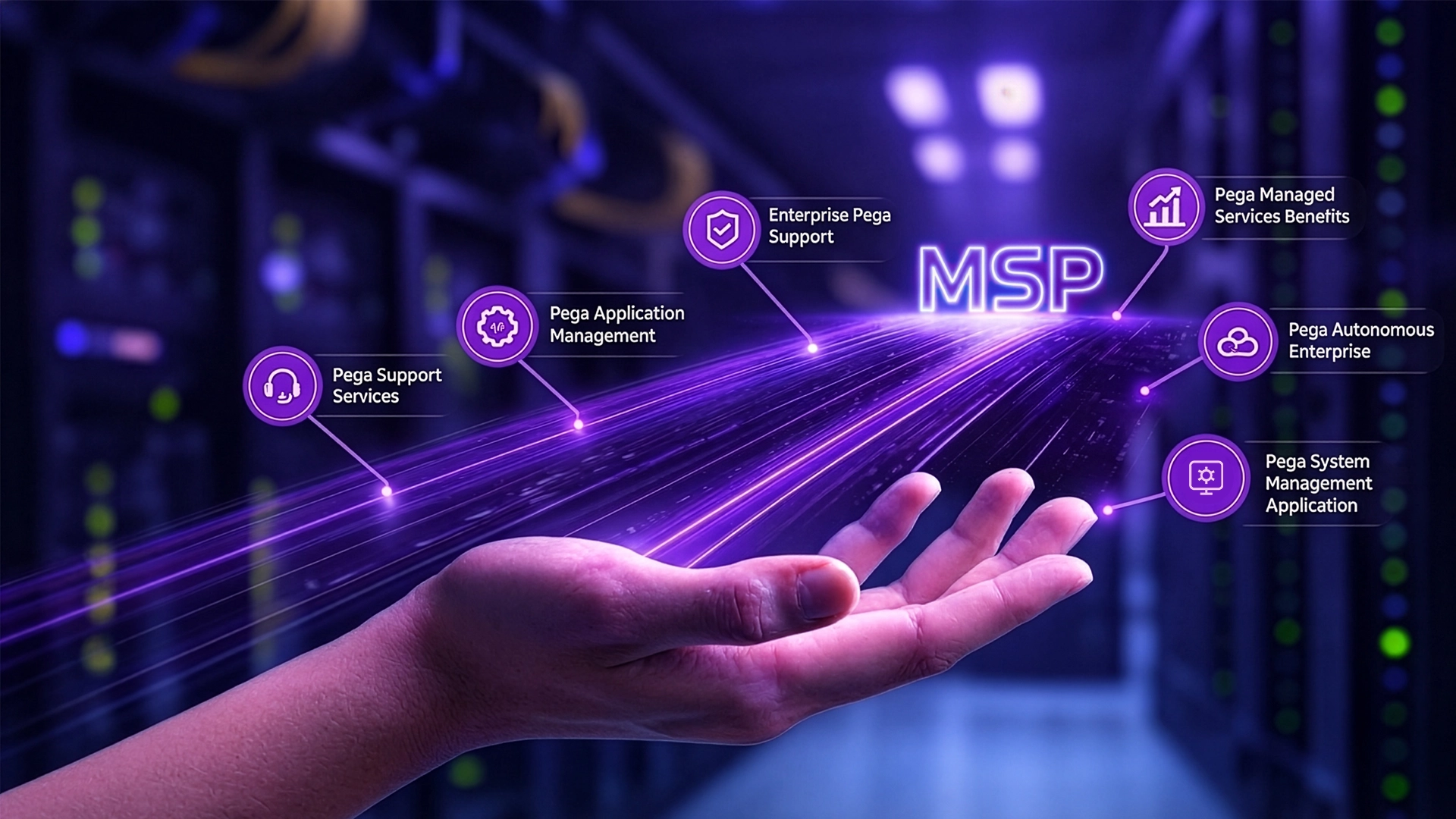
EvonSys MSP supports Pega Cloud, on-premise, and legacy environments with a Pega-native operating model designed around proactive monitoring, SRE practices, automation, and structured support. The value is not simply having another team manage the platform. It is having an operating model designed around how Pega behaves in production.
Where Does Your Pega Platform Sit on the Maturity Curve?
A free Pega Reliability Assessment maps your current operational model across all eight capability dimensions, built around how Pega actually runs in production.