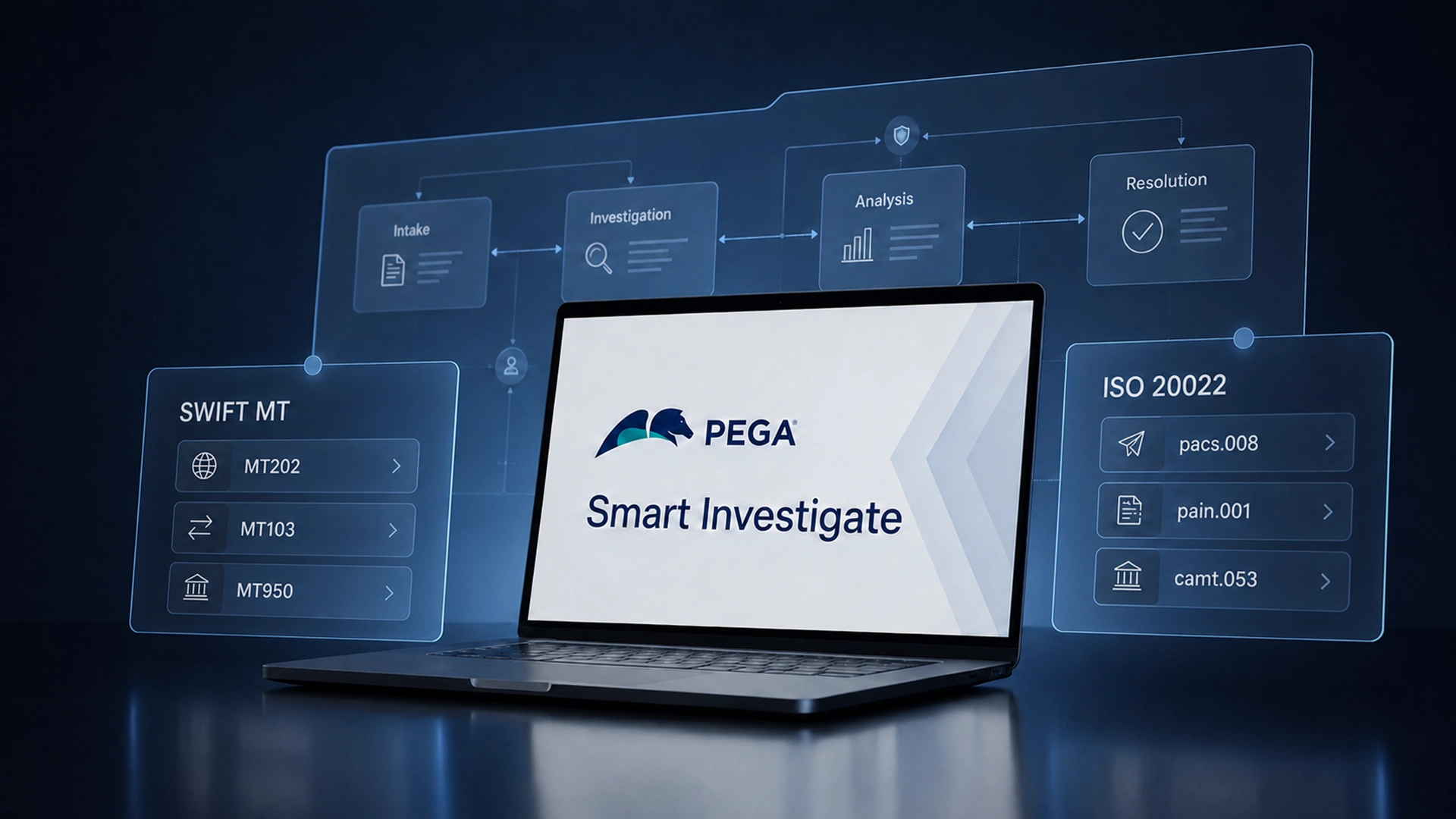
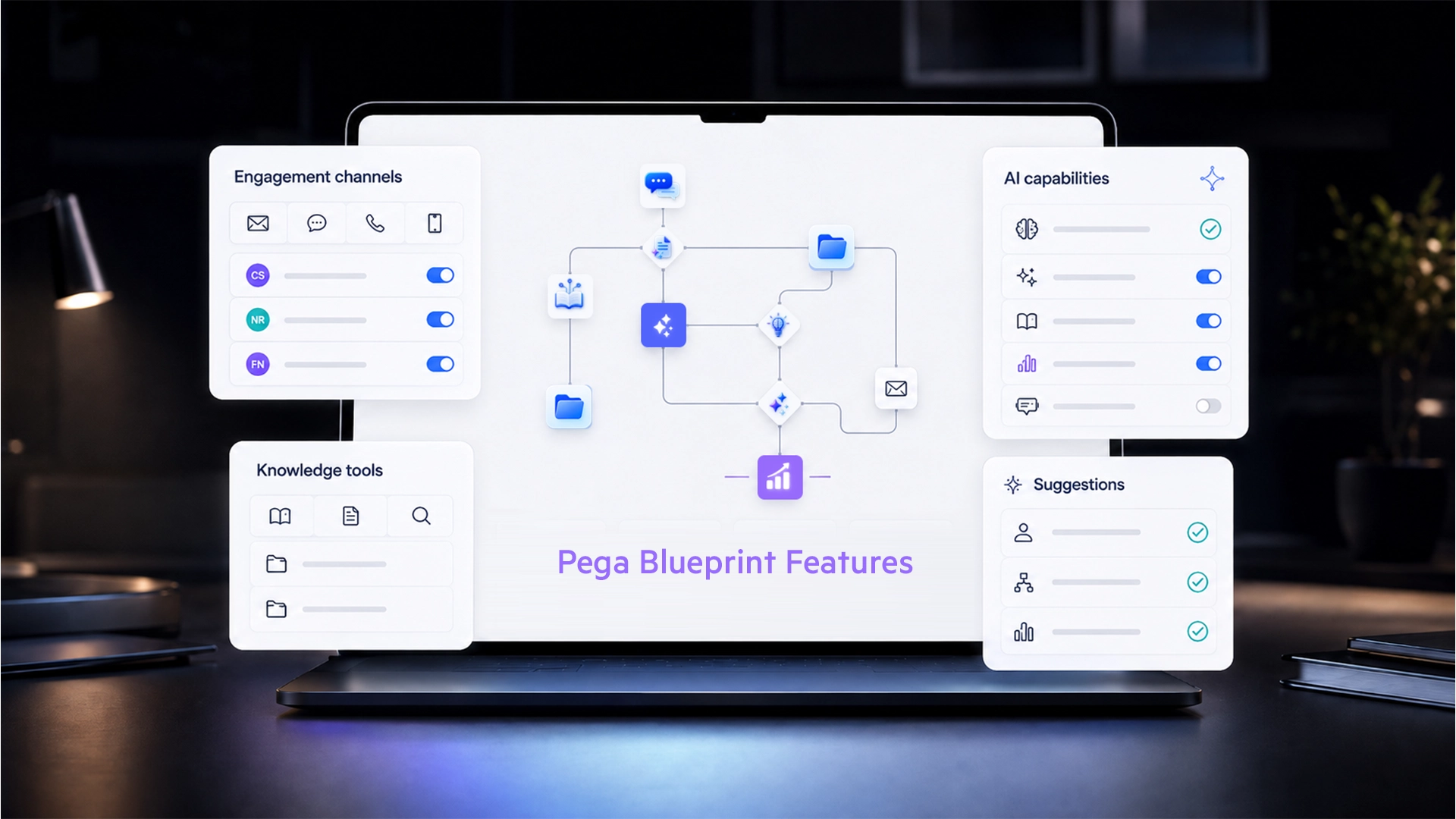
.png)

.png)
You walk into a meeting feeling confident that your team finally understands the application you want to build. You’ve repeated the business goals, the workflows, and the customer outcomes countless times.
However, the first draft of the requirements is nowhere near what you had in mind.
Suddenly, you’re back in the loop of meetings, documentation rewrites, and costly delays. While your team is working hard, the misalignment continues to push timelines, leading to missed deadlines.
This is a scenario teams across the organization often face. As the pressure to modernize workflows grows, particularly with AI transforming every corner of the industry, the need for a more accurate and faster design process becomes unavoidable.
That’s exactly where Pega GenAI Blueprint makes a difference.
Before we learn the business advantages, let's clarify what the Pega GenAI Blueprint is.
Pega GenAI Blueprint is Pega’s AI-powered application design accelerator, helping teams move from scattered ideas to clear, structured, and build-ready application blueprints.
Instead of relying on repeated documentation or multiple validation cycles, Blueprint transforms your business concepts into visual workflows, data models, case types, and final designs in minutes.
You can describe your application goal, and within a few steps, the generative AI creates a tailored design based on your business goals.
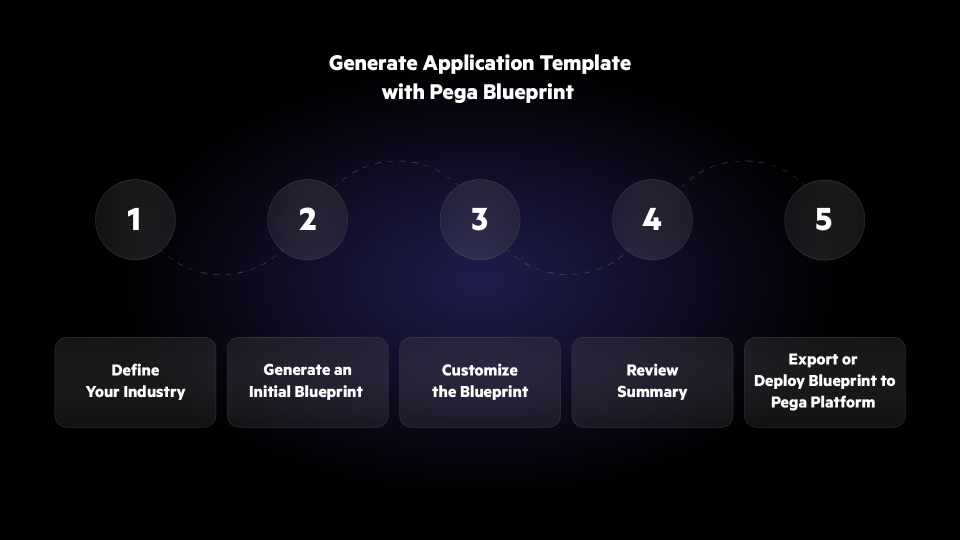
Select the industry, sub-industry, and department or function for your application to reflect the business process. You can also upload media, which offers a simple way to describe your legacy system and generate an accurate summary.
Describe your application’s purpose that helps Blueprint map your business needs.
The pre-built templates include a pre-built industry template or utilize its generative AI engine to automatically create a starting design, including case types, data models, personas, descriptions, and more, providing a relevant starting point.
Once your template is generated, you can review and refine every component to match your operations. This includes adjusting case types, reorganizing stages and steps in the case lifecycle, and refining user personas.
Use the Summary view (application overview) to review all major design elements: workflows, data models, personas, and integrations. Confirm that everything aligns with your business needs.
You have the option to download a PDF summary for review by stakeholders. It can be exported into the Pega platform for application development.
One of the biggest advantages of Pega GenAI Blueprint is its ability to reduce months of design work into minutes using GenAI and Pega’s library of industry-proven best practices. With AI providing the initial structure, one can speed up the delivery of high-quality applications while ensuring consistency, compliance, and scalability.
Let's explore some of the enterprise benefits that GenAI provides:
Before development begins, enterprises must align business requirements, workflows, and technical designs, a process that often delays project initiation. As modernization initiatives grow in complexity, requirement discovery and application design activities often delay project kickoff and slow digital transformation efforts.
Pega GenAI Blueprint changes this by generating an AI-assisted application blueprint from business inputs, existing documentation, and process context. Instead of starting with blank documents, project teams begin with a structured template that includes recommended workflows, data models, case types, and integrations.
Pega GenAI Blueprint combines generative AI with Pega's low-code platform to transform business ideas into structured application designs. As the blueprint is directly aligned with the Pega platform, users can either download the file or import it into the Pega platform to develop the application.
Creating a shared application blueprint before development helps business stakeholders and IT teams align on workflows, personas, data requirements, and the overall application design. Pega GenAI Blueprint provides a single visual workspace where teams can collaborate instead of relying on disconnected documents. Stakeholders can review, validate, and refine the blueprint together, ensuring changes are incorporated before development begins.
When a bank designs a digital customer onboarding application, relationship managers define the onboarding journey, KYC analysts specify identity verification requirements, and compliance teams incorporate AML and regulatory checks. The solution architects map integrations with core banking systems, identity verification providers, and document management platforms. GenAI generates workflows, personas, data objects, and integration points, which stakeholders collaboratively refine. Every stakeholder contributes to a single blueprint, ensuring the final application design reflects both business objectives and regulatory requirements before development begins.
Pega GenAI Blueprint helps organizations establish standardized application designs by generating blueprints that follow Pega's best practices and reusable design patterns. This creates a common framework for defining workflows, data models, personas, and integrations across modernization initiatives. With a centralized design environment, stakeholders collaborate to improve design traceability, promote consistency across applications, and align development initiatives with enterprise standards before implementation begins.
Pega GenAI Blueprint helps organizations accelerate legacy transformation by analyzing existing business documentation, process definitions, and application context to generate a modern application blueprint. Rather than manually recreating application designs, teams receive AI-generated recommendations for workflows, personas, data models, and integrations that can be refined collaboratively. By identifying core business logic and translating it into a structured application design, Pega GenAI Blueprint provides a clear foundation for modernizing legacy applications on the Pega platform.
When it comes to making the most of Pega GenAI Blueprint, partnering with the right implementation team is crucial. EvonSys brings years of Pega expertise and hands-on Blueprint experience to help organizations design and deploy faster.
Ready to turn your next app idea into a build-ready blueprint?

.png)


.png)