.png)

.png)
Volunteer compliance is no longer optional for nonprofits, and it’s a critical part of managing risk and maintaining trust.
As your volunteer base grows, so does the complexity of ensuring that every individual meets compliance requirements. From tracking training completion and background checks to maintaining accurate records for audits, even small gaps can lead to serious consequences.
In many nonprofits, volunteer compliance is still managed through spreadsheets, emails, and manual follow-ups. While this may work at a smaller scale, it quickly becomes difficult to manage compliance as programs expand. Records get scattered, updates are missed, and there is no clear visibility into volunteer compliance status.
This lack of structure makes risk assessment for volunteers challenging. Without a centralized system, it becomes difficult to identify compliance gaps, monitor expiring certifications, or ensure that volunteers meet the necessary standards before being assigned to critical roles. Over time, these gaps increase operational risks and expose nonprofits to compliance failures.
This is where digital workflows play a key role. By centralizing compliance processes, automating tracking, and providing real-time visibility, nonprofits can move to a more risk-aware approach.
For many organizations, volunteer compliance for nonprofits is often viewed as just paperwork, waivers, background checks, and contact forms. However, in today's regulatory environment, it serves as a critical shield for your mission.
As your volunteer base grows, so does your liability. You must ensure every volunteer is properly trained while maintaining data privacy and on-site safety.
Volunteer compliance is about building a culture of safety. When you prioritize compliance, you protect your organization’s reputation, your funding eligibility, and, most importantly, the people you serve.
Relying on manual tools for volunteer risk management creates gaps in your program. When compliance data is stored in physical file cabinets or scattered spreadsheets, it becomes static and invisible.
Here are the hidden costs of sticking to manual methods for compliance management:
The "Gap" in Vetting: Without automated alerts, coordinators may schedule volunteers with recently expired background checks. This exposes your organization to significant liability and reputational risk.
Lost Documentation: If any paper waivers are lost, you cannot produce a signed liability waiver immediately, and your legal standing is compromised.
Inconsistent Risk Assessment: Manual risk assessment for volunteers is often subjective and inconsistent. Different coordinators might apply different standards, leading to gaps in which underqualified volunteers are assigned to high-risk roles.
Audit Failure: When funders or government agencies audit your program, they expect digital audit trails to be in place. Scrambling to find paper records signals to auditors that your internal controls are weak, potentially jeopardizing future grants.
Here is how digital tools strengthen volunteer risk management:
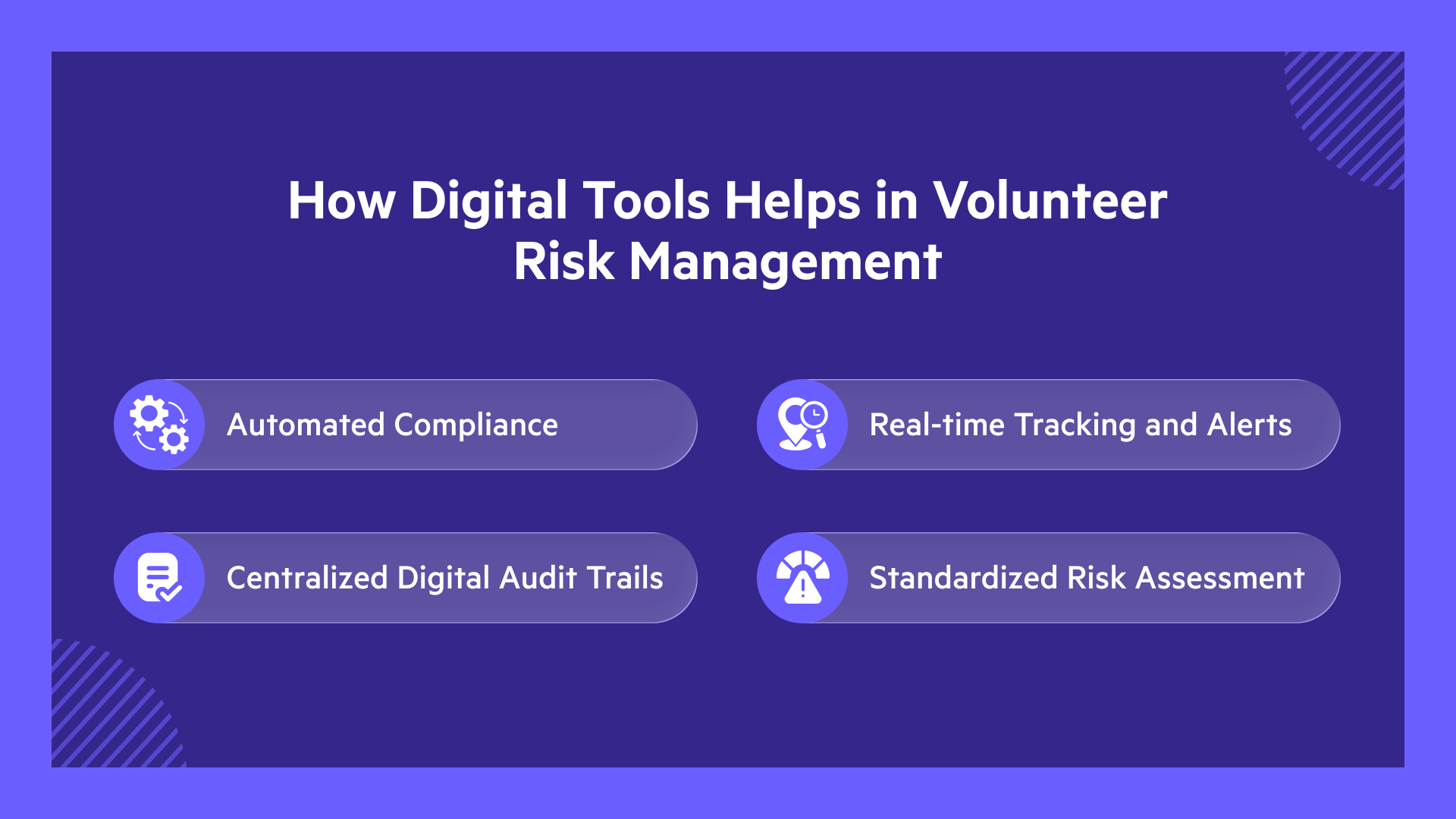
Automated Compliance: The most effective way to reduce risk is to prevent it from happening. Digital workflows act as a gatekeeper. The system can be configured to block a volunteer from signing up for a shift if their background check is still pending, their waiver is unsigned, or their training is incomplete. This ensures 100% compliance on every shift, automatically.
Real-time Tracking and Alerts: Manual spreadsheets don't send reminders, but digital systems do. Your workflow can automatically notify both the volunteer and the coordinator 30 days before a certification or background check expires. This keeps your workforce active and ready to serve without administrative havoc.
Centralized Digital Audit Trails: In a digital system, every action is logged. You need to know when a volunteer signed a waiver, who approved their application, and when they completed their safety training. This creates an exceptional digital audit trail. If an incident occurs suddenly, you can generate a comprehensive report in seconds, demonstrating that the organization strictly followed compliance protocols to minimize risk.
Standardized Risk Assessment: Digital workflows standardize risk assessment for volunteers. You can assign specific requirement levels to different roles (e.g., "Level 1" for event greeters, "Level 3" for mentors). The system ensures that a volunteer cannot be matched to a role unless they meet the specific risk criteria for that position. This helps ensure events run smoothly by eliminating human errors.
Volunteer compliance for nonprofits shouldn't be a barrier. It should be the foundation that allows you to operate effectively and serve your mission.
If you’re still managing compliance with spreadsheets and sticky notes, it’s time to modernize.
Reduce the risk and improve compliance by upgrading the systems that support your volunteers and protect your mission.
Don't wait for an audit to reveal the gaps in your system.
Explore Volunteer Management to automate compliance.

.png)


.png)