.png)

.png)
Every nonprofit organization starts small. You know every volunteer by name, and a simple stand-alone tool or spreadsheet works fine.
But success changes that dynamic. As the mission begins to resonate, more people step forward to contribute. Suddenly, that spreadsheet is not enough.
As your team grows, these manual methods begin to show their limits. Time is spent copying information between tools, tracking responses, and keeping up with an increasingly busy inbox. The personal touch that made your organization special starts to fade under the weight of administrative work.
In fact, we recently discussed how small nonprofit teams often get overwhelmed by large volunteer programs. When success feels like failure because of burnout, it is a clear sign that you have outgrown your current processes.
This moment becomes a turning point. To continue growing effectively, nonprofits need tools that go beyond basic tracking. A stronger volunteer management system does more than just list names; it handles complex programs and keeps your data safe.
Here is what to look for in a volunteer management system.
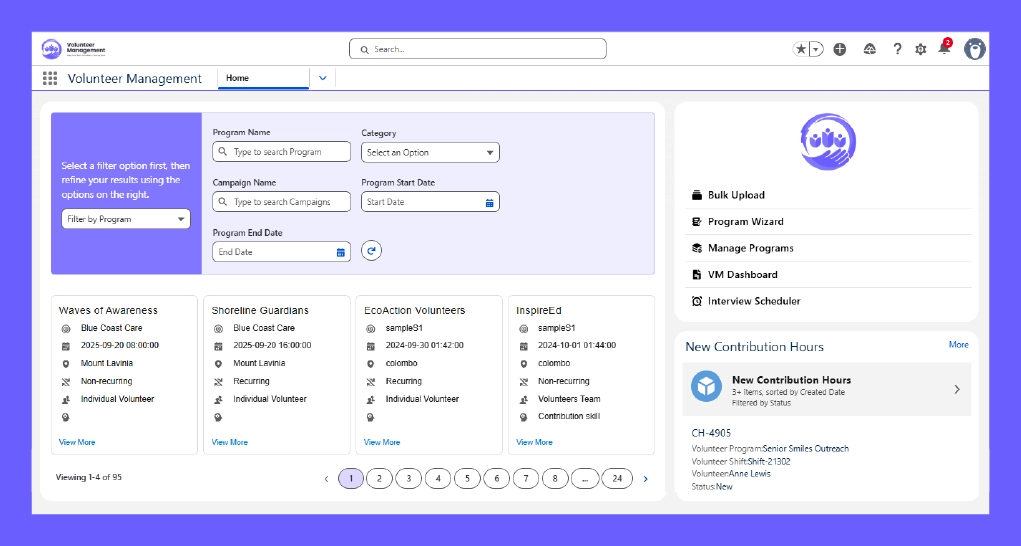
When you have limited staff, you cannot afford to do everything manually. Time is the most valuable resource. If you are spending more than 20 hours per week on data entry, you are not spending enough time on your mission.
You need to look for specific features in your volunteer management system that automate logistics. This allows you to focus on building relationships, not formatting cells in Excel.
Small nonprofit teams rarely have dedicated operational staff. You might be the Program Director, the Volunteer Coordinator, and the Social Media Manager all at once. This makes automation essential.
Modern volunteer management tools eliminate this entire scenario. They:
This automation allows you to manage a large program without getting bogged down. You can focus on training and impact, not on sending "remember to show up" texts the day before an event.
Growth becomes unmanageable if volunteers rely on staff for every small update. If 50 volunteers email you to change their address or ask about their total hours, your day is gone.
A robust volunteer management system gives volunteers the power to manage their own journey through a secure web or mobile portal. They can:
Every task volunteers handle themselves is a task your coordinator doesn't have to touch.
A basic calendar is no longer enough, as your programs expand. The right volunteer management tool handles different types of commitments.
Your volunteer management system should support both one-time events, such as a fundraising gala, and recurring schedules, like a weekly tutoring session.
Look for volunteer management tools that allow you to define a "recurrence pattern" easily. You should be able to set up a shift that repeats every Tuesday for six months in just a few clicks.
This flexibility ensures that you can manage long-term programs as easily as single events. It helps you build a reliable roster of regulars, which is the backbone of successful volunteer management for nonprofits.
A volunteer who hits friction at sign-up may never return. But speed cannot come at the cost of safety, especially when volunteers are working with vulnerable populations.
Modern volunteer management tools offer customizable registration forms. These tools let you include built-in Terms & Conditions or digital waivers right from the start.
However, speed should not compromise safety. These systems allow volunteers to self-onboard while still giving Program Managers control. A clear "Volunteer Approval Process" lets the program managers review skills and schedule interviews before a volunteer is fully approved for sensitive roles.
You aren’t just managing people. You are managing data that proves your worth to funders. Data teams can spend up to 80% of their time cleaning and combining data rather than analyzing it.
A small team often struggles to compile data before board meetings. You end up guessing numbers or frantically counting hours in Excel. The right volunteer management tool does this in the background for you.
One of the biggest risks for a growing team is over-booking or under-booking for an event. You need a volunteer management system that tracks Volunteer Shift Capacity in real-time.
As volunteers sign up online, the system should calculate the "Number of Volunteers Still Needed" automatically. If a shift requires ten people, the registration should close instantly when the tenth person signs up.
This ensures you always have the exact number of hands on deck. You never have to have the awkward conversation of turning a disappointed volunteer away at the door because too many people showed up.
It is all about the work you have done and the contributions you have made to the program. Your stakeholders and funders want to know the impact you have created on previous events.
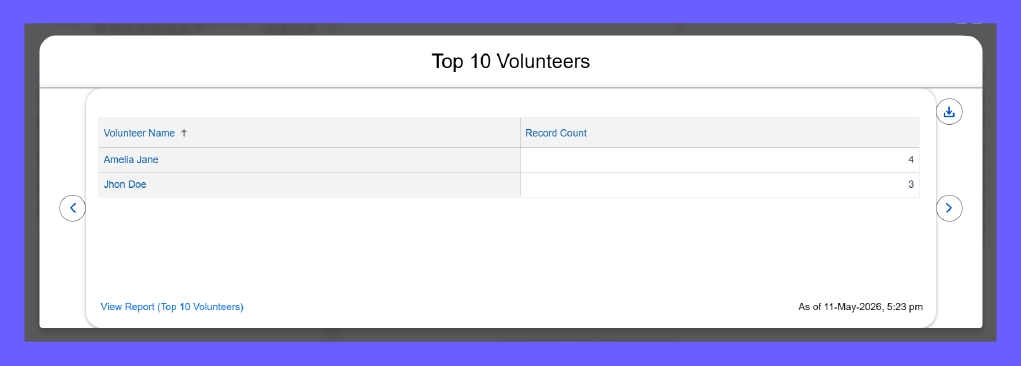
Dedicated volunteer management tools can automatically generate reports and dashboards to measure impact.
Key metrics your system should surface with a single click:
This data tells the story of your organization’s efficacy. It provides the hard numbers needed to secure grants and satisfy board requirements.
As you grow, data scattered across different personal computers becomes a liability. If a key staff member leaves, do they take the volunteer data with them?
Comprehensive volunteer management tools provide a centralized database. It acts as a "single source of truth." It stores all volunteer data, including past history, contact info, and activity logs, in one place.
This allows you to use Skill Management features effectively. If you need a photographer for an event tomorrow, you shouldn't have to email everyone. You should be able to filter your volunteer management system for preferred "Skill: Photography" and find the right person in seconds.
An improved UI allows users to seamlessly navigate the platform and enroll in preferred programs. If the software is too hard to use, your team won't use it. And if your volunteers find it confusing, they won't return.
Most of the volunteers are young and often stay on their mobiles. They might decide to sign up for a shift while waiting for a bus or during a break. If your tool only works well on a desktop, you are missing out.
Ensure your volunteer management system has a device-friendly design. A fully functional mobile application or mobile-responsive portal allows volunteers and coordinators to manage activities on the go. They should be able to check in, log hours, and sign up for new opportunities from the palm of their hand.
Complexity is the enemy of execution. The interface should be intuitive for both administrators and volunteers.
When evaluating volunteer management tools, look for features such as the Volunteer Wizard. This guides managers step by step in creating campaigns and programs. It ensures that even a new intern can set up a complex event without errors. A simple, clean design reduces training time and frustration, ensuring your team actually adopts the volunteer management system.
As you scale, you cannot afford to have your data isolated in different pockets of your organization.
Look for a volunteer management system built on a platform that:
Moving away from manual methods and adopting a dedicated volunteer management system can help organisations operate efficiently. It is a crucial step in following industry volunteer management best practices.
This transition ensures that data is secure and accurate. Ultimately, EvonSys Volunteer Management brings together the features and capabilities discussed above, offering the structure, visibility, and ease of use that growing nonprofit teams need.
Ready to Scale Your Impact?
Don't let administrative chaos hold your mission back. Experience the difference a dedicated volunteer management system can make for your team.

.png)


.png)