Humans have been "gamifying" behaviour for far longer than the word existed. The gold stars in classrooms. The frequent flyer miles. The Boy Scout merit badges sewn onto a sash with pride. The instinct to reward progress is ancient, but the science explaining “why” it works is surprisingly recent and powerful. We try to unpack that science in this article and what gamification actually does in the brain, where it has delivered remarkable results, where it has collapsed, and what conditions determine which outcome you get.
The term "gamification" was coined in 2002 by Nick Pelling, a British game developer, but went mainstream around 2010–2011 with the rise of Foursquare, Nike+ and Duolingo.
At its core, gamification is not just about making things "fun"; it's about making progress visible and effort feel meaningful. The clearest evidence of this distinction is the progress bar. People do not enjoy a progress bar because it is entertaining. Instead, the brain feels uncomfortable leaving something unfinished. When we see a task at 80% complete, our minds want to finish it and relieve that mental tension. This physical urge is called the Zeigarnik Effect, discovered by Bluma Zeigarnik in 1927.
The progress bar does not work because it creates pleasure, but because it creates a deficit that the brain is motivated to close.
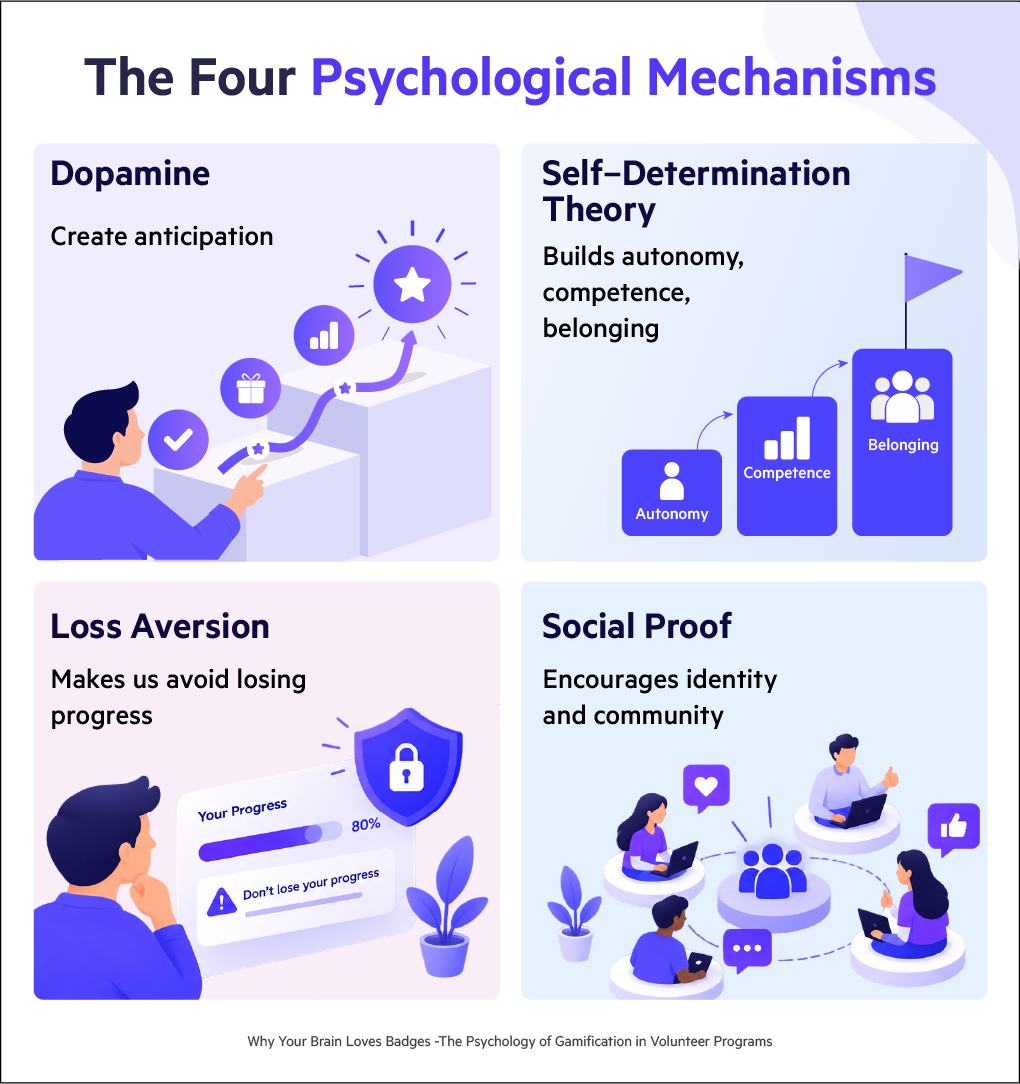
Dopamine is often misconceived as the “pleasure chemical, " while endorphins are more connected to pleasure and enjoyment. Dopamine drives seeking behaviour and anticipation, which is a far more useful distinction for anyone designing a motivation system.
The brain’s mesolimbic reward pathway releases dopamine not when you receive a badge, but when you are about to earn it. Research by Wolfram Schultz showed that humans are driven by the expectation of rewards, which is why progress bars, streaks, and milestones are so effective in gamification.

Deci & Ryan's SDT (1985, still widely cited) identifies three core psychological needs:
Autonomy (the sense that I am acting from choice), Competence (the sense that I am developing in meaningful ways), and Relatedness (the sense that I belong to something larger than myself).
Gamification, when done well, hits all three. When gamification fails, it's usually because it only triggers extrinsic rewards, and fails to touch and motivate the user intrinsically.
Kahneman & Tversky's loss aversion research shows losses feel approximately twice as psychologically powerful as equivalent gains. This asymmetry is a deeply embedded survival mechanism, and one of the most ethically complicated levers in motivation design. Apps like Duolingo and Snapchat use this by making users emotionally attached to maintaining streaks, where the fear of losing the streak becomes more motivating than the reward itself. While this increases engagement and habit formation, it can also create anxiety and compulsive behaviour, as some users prioritize protecting streaks over sleep or studies.
Robert Cialdini's work on social proof established that humans use other people's behaviour as a signal of their own correct action. In gamification, this manifests in a specific and underappreciated way: visible achievements not only reward the holder but also recruit the observer.
A repeated behaviour can become part of a person’s identity, for example, someone who consistently runs may eventually see themselves as a runner, making the app or reward system less important. However, gamification can also harm identity when systems like public leaderboards constantly highlight average or lower performance, causing people to feel overlooked or inadequate rather than motivated.
Success stories with data:
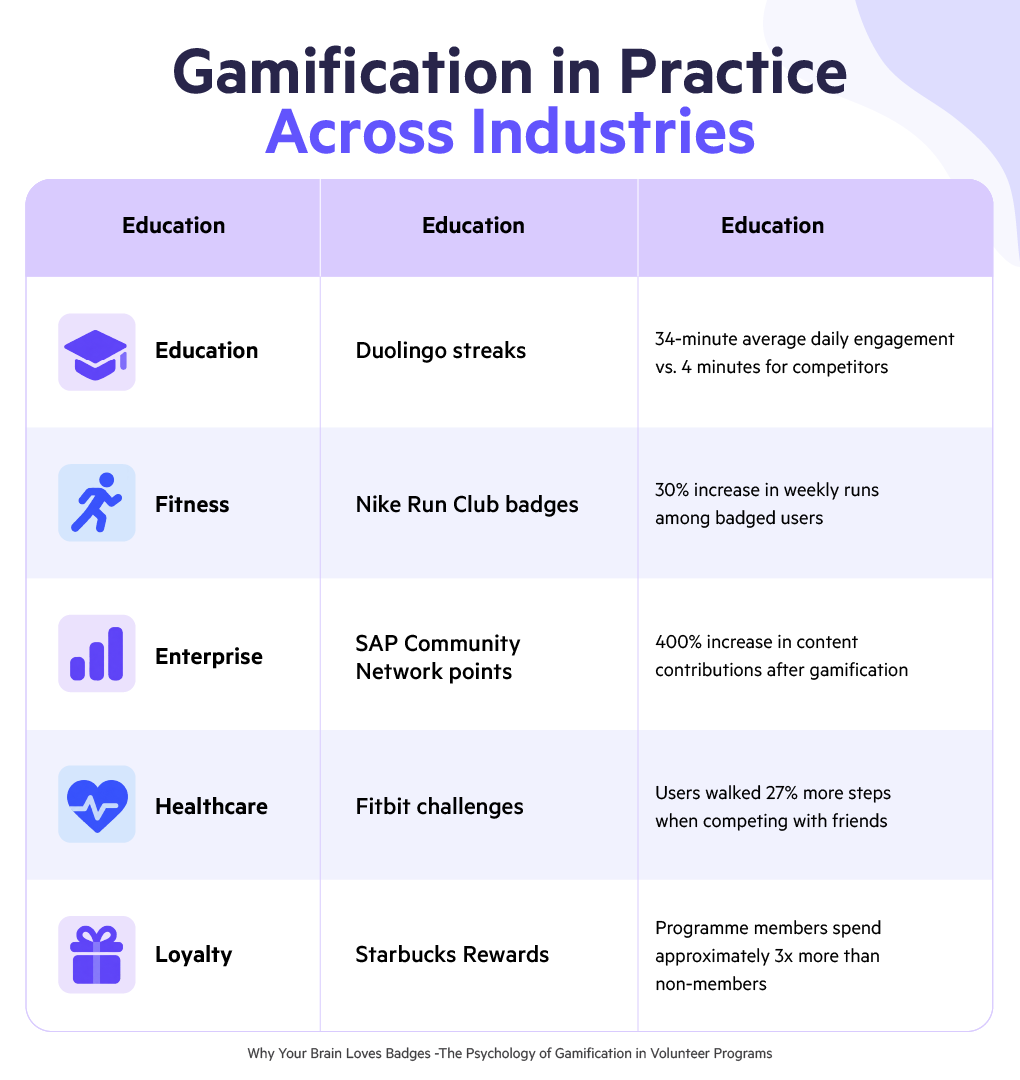
This explains that successful gamification is not about using specific game elements like badges or streaks, but about connecting those mechanics to goals people already care about.
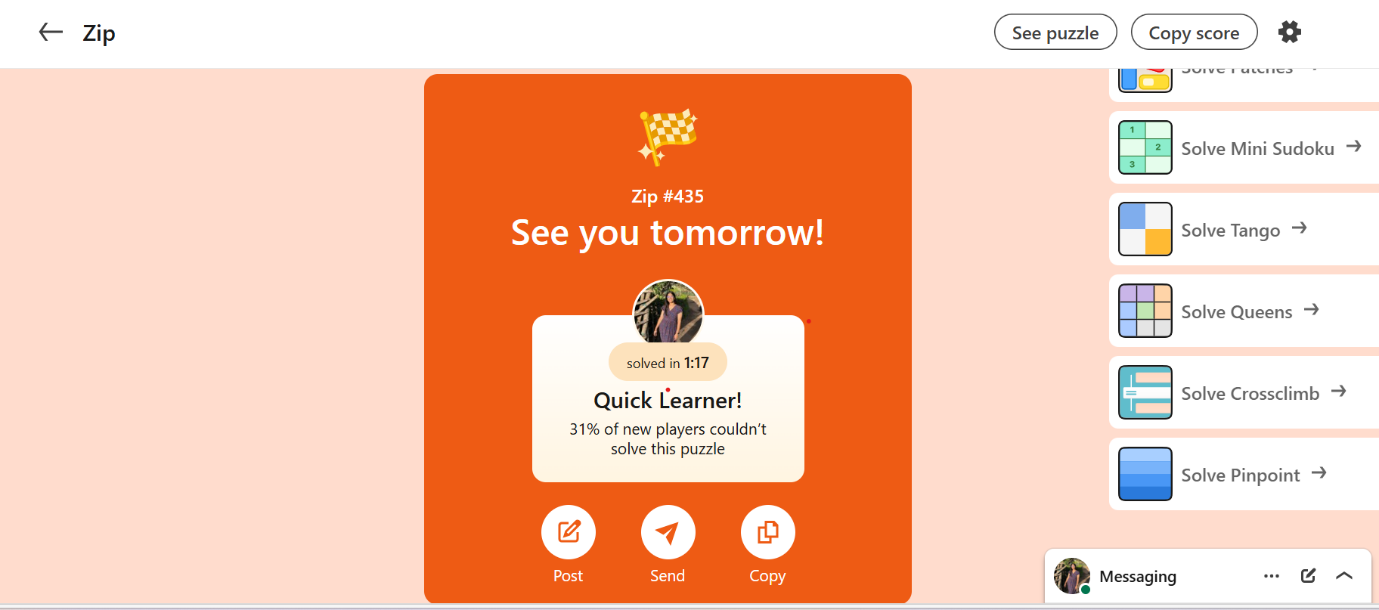
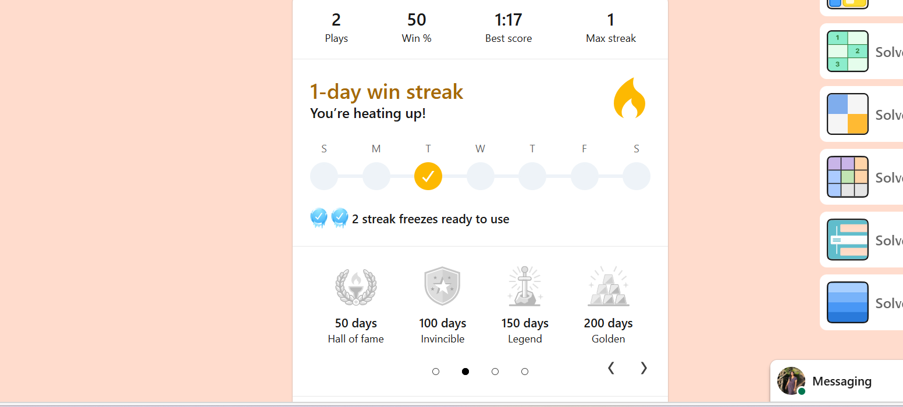
LinkedIn is a particularly instructive case because the company built a sophisticated gamification layer without ever creating anything resembling a game. The progress bars, endorsements, streaks, leaderboards and shareable achievements to encourage repeated engagement without becoming a game.
LinkedIn's Zip puzzle, in particular, uses loss aversion (streak freezes), social validation (college leaderboards), and identity signalling (shareable scorecards) to build daily re-engagement habits. Ultimately, the puzzle is not just a game, but a strategic tool used to increase daily app opens, time spent on the platform, and overall LinkedIn ecosystem engagement.
In September 2010, Volkswagen sponsored a Speed Camera Lottery experiment widely known as “The Fun Theory” in Stockholm. It photographed drivers exceeding the speed limit and simultaneously entered compliant drivers into a lottery funded by speeding fines. The result was a 22% reduction in average speed on that segment. Not through increased punishment, but through a positive, unpredictable reward for behaviour already legally required.
This is the cleanest available demonstration that positive reinforcement can shift entrenched behaviour, but only when the design treats the reward as a catalyst rather than a permanent feature.
Leaderboards without context: When only the top 10% of contributors are visible in the leaderboard and the bottom 90%, who are the majority, feel neglected entirely. The classic example is the early gamified sales floors in telecoms and call centre environments. The visible rankings on the leaderboards often demoralize mid-performers, who were the very people the system was meant to motivate.
Extrinsic rewards are crowding out intrinsic motivation. The over justification effect is most damaging in contexts where intrinsic motivation already exists. A 2025 study from the European Conference on Games Based Learning, examining 57 Swedish volunteers, found that achievement badges produced no statistically significant behaviour change in an intrinsically motivated population. Participants in the gamified condition completed tasks faster but wrote noticeably shorter responses, a net loss in quality of engagement rather than a gain.
Shallow implementation: Adding a badge to a bad experience doesn't fix the bad experience. Gamification cannot repair a fundamentally flawed product, workplace, or experience. Instead of creating engagement from nothing, it amplifies the existing emotions.
Volunteers are already intrinsically motivated. They are not participating for money, which means gamification carries a lower risk of crowding out motivation because the reward is recognition rather than financial incentive.
As the psychologist and philosopher William James observed, “The deepest principle in human nature is the craving to be appreciated." "Volunteers have already answered that principle from the giving side. The gamification question is whether organisations can match it on the receiving end.
Volunteers participate for purpose, connection and the quiet satisfaction of doing something that matters. Recognition-based gamification aligns with those motivations rather than competing with them. But this also means the design must be careful. Volunteers are highly sensitive to the difference between authentic appreciation versus performed appreciation. The 2025 European study found this directly that badges disconnected from actual volunteer values or organisational mission produced no meaningful engagement change at all. The volunteers recognised the badge for what it was, an automated signal that nothing meaningful had been noticed.
Organizations traditionally recognize volunteers annually through galas and certificates. But the psychological research on reinforcement suggests that “immediate” and “frequent” feedback produces dramatically stronger behavioural reinforcement than delayed and generic feedback.
Tiered milestone systems that move a volunteer through named tiers (Newcomer, Contributor, Advocate, Legacy Builder) create a narrative structure for the volunteer's relationship with the organisation.
Qualitative recognition (star ratings per shift) alongside quantitative (hours), which ensures that the quality of contribution is recognized by not just volume, but also for quality.

Profile completeness scores encourage richer data while giving the volunteer a sense of agency over their own representation.
Progress dashboards in which a volunteer can see their complete history, as hours, shifts, milestones, ratings, and history of programs participated, bring a personal narrative. Identity-based motivation suggests retention that becomes largely self-sustaining.
Volunteers are not forced to update log hours, their profiles or maintain availability information. This is one of the most persistent problems in volunteer management. But the volunteers will do all these things willingly if the systems make their own story worth maintaining.
A volunteer who wants to progress to the next milestone tier has a personal incentive to log hours accurately. A volunteer who takes pride in a complete profile provides the organisation with scheduling, skills, and contact data that it would otherwise spend coordinator time chasing. The recognition infrastructure and the data infrastructure are not separate systems, but the same system serving two different audiences.
This is where volunteer management software becomes important. A dedicated platform that supports the entire lifecycle helps organizations keep volunteers informed, engaged, committed and recognized. When volunteers consistently feel valued and involved, retention becomes a natural outcome rather than something organizations must constantly fight.
The paradox of gamification is that it functions best when the recipient has stopped thinking of it as a mechanism.
A badge earned after a volunteer's 100th hour is not meaningful because it is a badge. It is meaningful because it is evidence that the organisation noticed the 100th hour. The dopamine hit and the identity reinforcement are real. But none of it works if the underlying recognition is hollow, if the badges are generated automatically, and the volunteer feels like no one actually witnessed what it represents.
The entire design challenge reduces to this, “Gamification succeeds when it reflects genuine achievement. It fails when it performs recognition while bypassing its substance.”