.png)

.png)
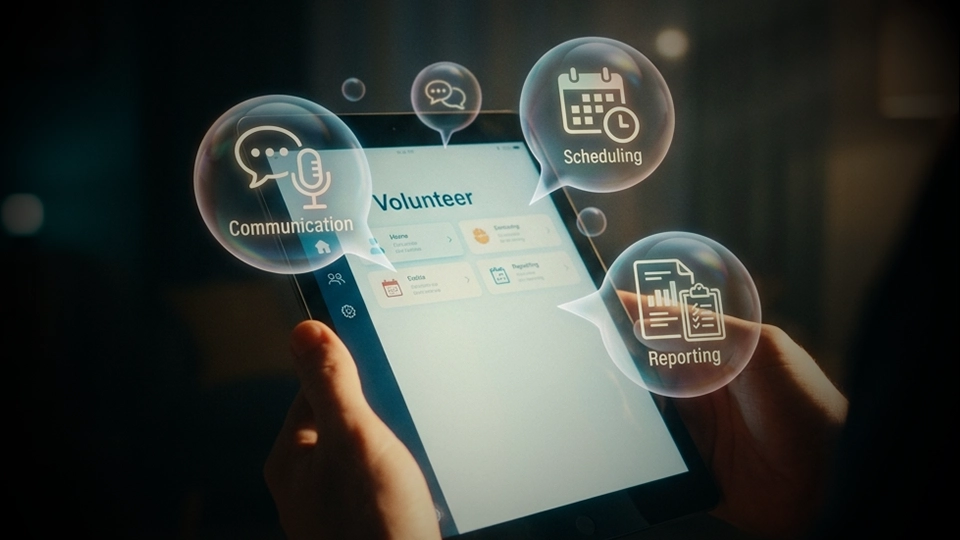
Every nonprofit wants to keep its volunteers engaged, yet many struggle to meet their expectations. The cause is rarely a lack of passion or commitment to the mission, it’s often something far simpler: volunteer communication.
One missed email, a confusing message, or a forgotten reminder, just a single slip can push a volunteer away, sometimes without the organization even realizing it.
You know that volunteers are the backbone of every cause. In fact, research shows that 77% of volunteers experience improvements in their mental health and overall well-being through volunteering, highlighting just how meaningful their contributions are. They give their free time, skills, and energy, without expecting anything in return, because they believe in your mission. Yet even the most dedicated supporters will walk away if they feel disconnected or frustrated.
If you want to keep your volunteers updated and stay connected, here are the five common volunteer communication mistakes you should avoid.
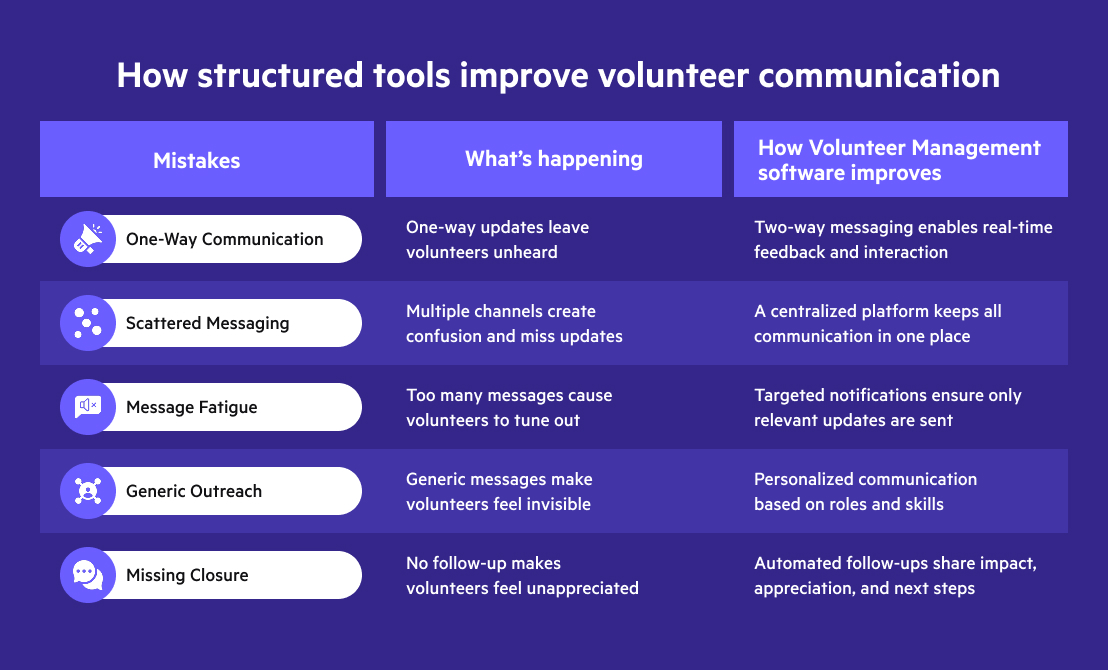
One of the biggest nonprofit organizations’ volunteer communication mistakes is relying on one-way outreach. Organizations believe they are keeping volunteers informed by sending reminders, instructions, and updates. However, effective volunteer communication does not end with sending messages.
When feedback loops are missing, you are only doing half the work. Volunteers often feel undervalued when they have no means to ask questions, share suggestions, or express concerns, and they begin to feel like communication is more like a broadcast rather than a conversation. Over time, volunteers start to disengage as no one wants to feel like just another name on an email list.
Volunteer communication systems replace “no reply” emails with in-app messaging or SMS gateways that allow volunteers to receive a structured feedback loop. Volunteers can respond to event invites, confirm participation, ask questions, and submit feedback within the same platform. Coordinators can track responses in real time, identify concerns early, and act on them before they escalate.
Many nonprofits juggle multiple tools at once: email threads, WhatsApp groups, spreadsheets, shared drives, phone calls, text messages, and more. Many nonprofits use them all at once. While each tool seems helpful and powerful on its own, together they create confusion.
When nonprofit communication is scattered across multiple platforms, volunteers often question:
When nonprofit communication is scattered across multiple platforms, volunteers miss critical information, struggle to stay organized, and are unable to predict which updates are the latest, feel unprepared, and lose confidence in the organization’s coordination. Over time, this confusion turns into frustration and leads to disengagement.
This is why many organizations eventually seek the best software for company volunteer programs to centralize their outreach efforts. The software pulls these interactions into a single, unified hub, so volunteers know exactly where to check for updates. Volunteers no longer need to switch between tools or verify information across channels. This consistency improves reliability, as every update is trackable and visible in one place.
In an effort to keep volunteers informed, nonprofits often send too many messages, long emails, repeated updates, or multiple reminders across different channels. However, when volunteers are overwhelmed with information, they stop reading entirely.
Important details get overlooked when messages feel repetitive. When volunteers start ignoring messages, they miss critical information, which can lead to frustration and disengagement, even if they still care about the mission. That’s why you should maintain fewer, clearer, and more structured messages. Quality volunteer communication is far more effective than constant, cluttered communication.
Volunteer management software enables nonprofits to segment volunteers by role, location, or shift. So, only relevant volunteers receive specific updates, eliminating unnecessary notifications for everyone else. This makes sure important information stands out, reduces cognitive overload, and increases the likelihood that volunteers read and act on what truly matters.
Volunteers are not a single audience. They have different skills, availability, experience levels, and motivations. Yet, many nonprofits send the exact same generic message to everyone. When messages feel generic, volunteers feel invisible.
When volunteer communication lacks relevance, they struggle to see their place and the value they bring. Personalization is about making the message relevant to the individual who feels valued and connected to the mission.
Volunteer management software solves this problem by turning generic outreach into personalized, role-based engagement. Instead of treating volunteers as one group, it helps nonprofits recognize and communicate with them as individuals.
The event ends successfully, the mission is delivered, and communication goes silent. No follow-up, no impact update, and no acknowledgment or appreciation email for the volunteer effort.
When volunteers do not hear:
They begin to feel disconnected as their time and energy don’t matter. Without closure, volunteers feel like temporary labor rather than valued contributions, which significantly reduces the likelihood of long-term engagement.
Volunteer management software solves this problem by ensuring that communication doesn’t stop when the event ends. It helps nonprofits systematically close the loop with clear, timely, and meaningful follow-ups.
Each of these mistakes may seem small on its own, but together they create a volunteer experience that feels disorganized, impersonal, and exhausting.
Nonprofits rarely lose volunteers because of a lack of passion for the mission. They lose them because communication systems were never designed to support people at scale.
Identifying these gaps is the first step in improving volunteer communication. You can address them with the right strategy and the best software for company volunteer programs to build a loyal, long-term supporter base.
By choosing EvonSys’ Volunteer Management, you can automate your feedback loops, personalize every message, and keep your volunteers engaged from their first shift.
Remember, great communication is about creating clarity, connection, and continuity.
Don’t let fragmented tools and manual processes drive your supporters away.

.png)


.png)