.png)

.png)
I signed up to help, but I ended up missing my second shift because of a scheduling mix-up,” a volunteer said, disappointed by the confusion.
The event manager then had to check three separate sheets because there was no central volunteer-tracking system in place. One sheet for sign-ups, one for shift allocations, and another shared file with last-minute updates.
None of the records match because there is no real-time view of volunteer data. Another volunteer arrives, saying they signed up the previous week, but their name appears on one sheet and is missing from the latest version.
The team is forced to reassign roles on the spot, creating confusion for volunteers who had committed their time. The real issue is not a lack of data, but the fact that it is scattered across multiple spreadsheets with no centralized dashboard to provide clarity.
For many nonprofits, this is where the deeper challenge begins. Their mission continues to grow, but their systems do not evolve with it. As coordination becomes more difficult, something equally important begins to weaken: the sense of connection and trust that motivates people to volunteer in the first place.
That is why many organizations are rethinking how they engage, schedule, and retain volunteers, turning to volunteer tracking software to bring greater visibility, consistency, and ease to the process.
Despite the challenges that spreadsheets cause, they remain the default tool for many nonprofits. Here’s why:
That’s when nonprofits start exploring volunteer time tracking software built to scale with their mission.
The volunteer management platforms market has grown rapidly in recent years. It is projected to grow from $1.86 billion in 2025 to $2.21 billion in 2026, at a CAGR of 19%. This growth is driven by the limitations of manual volunteer-tracking methods, the expansion of the nonprofit sector, the increasing reliance on community programs, and the rising demand for structured, organized volunteer time tracking.
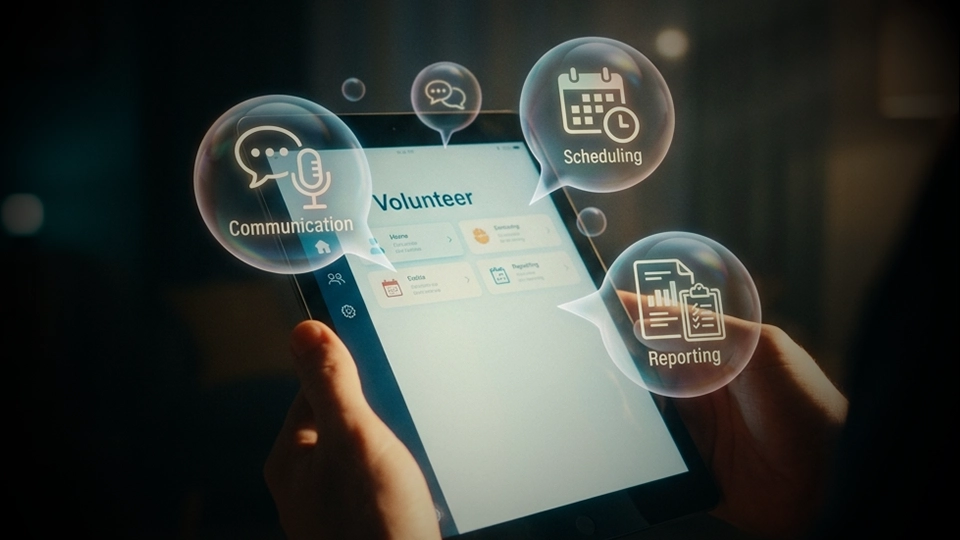
Using modern software, you can track volunteer hours, manage schedules, and personalize engagement.
Manual volunteer time tracking is one of the most significant pain points for coordinators. One missed cell or formula can throw off an entire report, creating a complete rework for the entire team.
Whether you’re managing a small team or hundreds of volunteers, a reliable volunteer time tracking software ensures more accurate reporting and that volunteers feel their time is valued.
Today’s volunteers expect mobile-friendly tools. They want to sign up, check schedules, and log hours from their phones, rather than searching through emails or downloading spreadsheets.
This means less confusion, more convenience, and a better experience for the people powering your mission.
Need to fill a last-minute shift?
Unsure who’s available or best suited?
This means smoother events, happier volunteers, and less stress for your team, all powered by smart volunteer tracking software.
Funders want proof, not just passion. However, when data is scattered across spreadsheets, reports can take hours and often fall short of expectations.
This means volunteers feel seen, funders stay informed, and your programs gain credibility, especially when backed by robust volunteer time tracking software.
Adding the volunteer details in spreadsheets is vulnerable to loss, theft, or accidental deletion. That’s a risk no nonprofit should carry.
This means sensitive data stays protected, and your organization stays trusted.
As nonprofits grow, so do the expectations of volunteers, funders, and the communities they serve.
EvonSys’ volunteer management is designed to support this shift by combining intelligent volunteer matching, seamless volunteer time tracking, and real-time engagement insights all within a unified Salesforce environment. This enables nonprofits to move beyond manual coordination and build deeper, more meaningful relationships with their volunteer communities.
Our 360° volunteer profiles provide a comprehensive, centralized digital record of a volunteer's engagement, skills, history, and impact within an organization. It integrates data to improve matching, personalize communication, and track contributions.
Ready to Simplify Volunteer Time Tracking?

.png)


.png)