.png)

.png)
Every nonprofit knows the excitement of welcoming new volunteers. A strategic initiative creates long-term commitment among volunteers. Many nonprofits lack a formal onboarding process, making the simple process complicated and frustrating for volunteers.
When nonprofits use checklists and automated processes, the onboarding becomes smoother and more efficient. When required details are collected automatically from volunteers during onboarding, such as required personal details, scheduling preferences, skills, interests, and more, it improves how effectively your nonprofit can operate an event in the future.
This blog discusses the key components to consider in the volunteer onboarding process and why it’s important to automate it.
Volunteer onboarding is a structured process that welcomes, trains, and integrates new volunteers from the initial sign-up through their first active shift. Creating an effective volunteer onboarding process is essential, as it shapes the first impression your organization makes and conveys its mission and core principles.
Understanding the most common challenges that nonprofits face during the onboarding process helps address them at the earliest stage:
As nonprofits grow, the number of volunteers usually goes up. This makes manually tracking sign-ups overwhelming. What works for onboarding 50 volunteers often fails when the number reaches hundreds or thousands, especially when volunteers are spread across different locations, roles, and schedules.
As the traditional onboarding process relies on paper-based and email-dependent processes, it can’t be scaled when registration volumes are high. This results in staff burnout and errors during manual handling. It is challenging to track who is at what stage of the onboarding process, such as background checks, interviews, or training, when relying on spreadsheets.
Without centralized tracking, the nonprofit misses real-time visibility into the volunteer onboarding process. Information is often stored in spreadsheets, emails, and paper forms, making it difficult to access accurate and up-to-date details when needed. Coordinators have no clear view of which volunteers have completed registration, submitted required documents, or attended orientation sessions. This lack of transparency leads to repeated follow-ups, last-minute confusion, and inefficient decision-making.
Many volunteers sign up with great enthusiasm, but their onboarding often gets delayed by background checks.
Without automation, you are still stuck with physical files or email threads waiting for approval. Without automated reminders or integrations, volunteers end up stuck in “Pending” status for days or even weeks, leading to a loss of trust or dropping off altogether.
Nonprofit volunteer management is difficult because it’s challenging to track mandatory screenings, such as criminal checks, in real time. This can lead to compliance failures that can affect nonprofits badly. Delays and communication issues can occur due to missing data.
Paper-based processes or decentralized spreadsheets often lead to human errors, such as misplaced documents, incomplete forms, and lost contact information. This creates compliance risks and makes it difficult to maintain accurate records.
When emails contain sensitive personal information about volunteers, such emails can attract hackers, eroding the nonprofit’s trust and credibility. There may be limitations in access restrictions for nonprofits, and someone could make unauthorized copies of the sensitive background information.
In manual volunteer onboarding, inconsistency becomes almost inevitable. Since there is no standardized process, each coordinator or team may follow their own onboarding process. Some may provide detailed orientations and clear instructions, while others rely on brief emails or last-minute briefings. This lack of uniformity means volunteers enter the organization with different levels of understanding, preparation, and confidence. As a result, some feel empowered and engaged from the start, while others feel confused or overlooked.
The manual volunteer onboarding process presents several critical operational, legal, and relational problems for nonprofit organizations, and a few are listed below:
For nonprofits managing limited resources and a growing volunteer base, a clear and practical checklist ensures that every volunteer feels prepared from the very beginning. The following checklist focuses on creating a consistent experience that scales across events.
.jpg)
Standardized Registration Process: Use a single digital form for all volunteer sign-ups that records essential details (skills, availability, interests) and ensures uniform data fields across programs.
Clear Role Definitions: Define responsibilities, expectations, and time commitments clearly. This helps volunteers understand their impact and reduces confusion later.
Automated Application Review & Approval: Set predefined workflows to review and approve applications. Automation ensures fairness and consistency in decision-making.
Consistent Communication Templates: Use standardized emails or messages for every stage of onboarding. This keeps communication clear and professional for all volunteers.
Mandatory Documentation & Compliance: Ensure all volunteers complete required forms, including waivers and policy acknowledgements. This protects the organization and keeps compliance consistent.
Structured Training & Orientation: Provide the same onboarding materials and sessions to all volunteers. This ensures everyone is equally prepared before they begin.
Pre-Event Engagement: Send reminders and key event details in advance. This keeps volunteers informed and prepared, reducing last-minute confusion.
Post-Onboarding Follow-Up: Gather feedback and keep volunteers connected.
Streamline the recruitment process with digital applications, automated background checks, and self-service training, saving staff hours while improving retention. Key steps include:
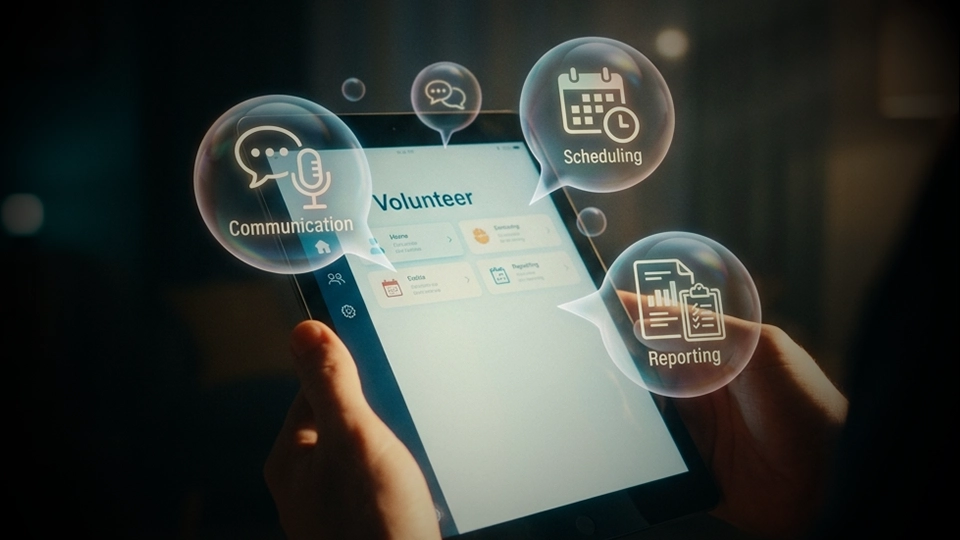
EvonSys' Volunteer Management is a Salesforce-native solution that automates volunteer onboarding. By moving away from manual coordination and spreadsheets, it uses built-in workflows and intelligent algorithms to handle administrative tasks, allowing organizations to focus on community impact.
With EvonSys, nonprofits gain access to centralized platforms that unify volunteer data, onboarding workflows, and communication channels. This ensures complete visibility into volunteer progress, making it easier to manage large-scale programs without losing control.
Move beyond the traditional onboarding process using EvonSys’ Volunteer Management

.png)


.png)