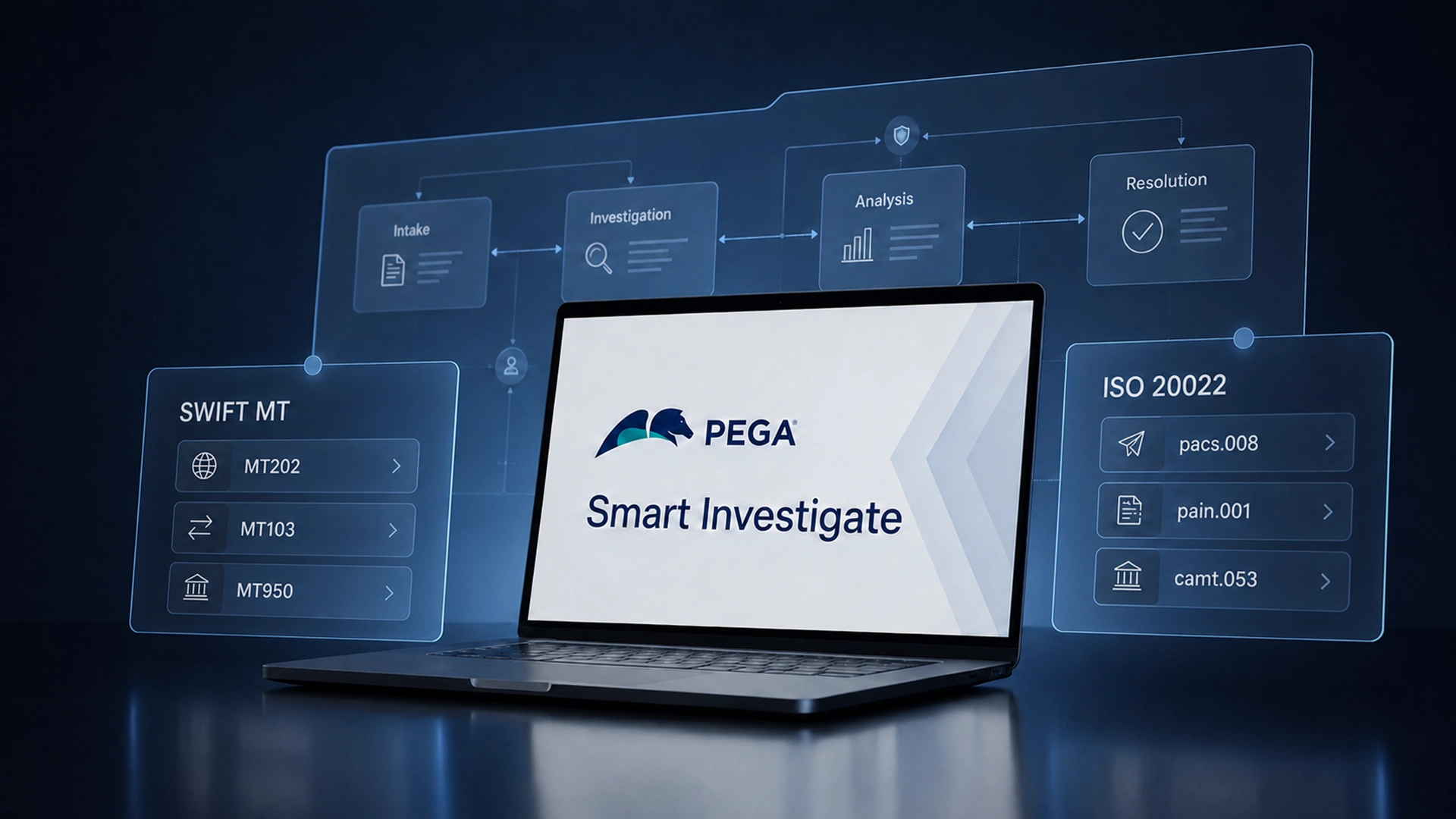
.png)

.png)
The discussion about automation in banking is leading towards low-code platforms. These platforms offer quicker development cycles and better automation, making them ideal for modernizing legacy-heavy banking environments.
Financial institutions manage complex operational work that flows across dozens of systems, teams, and regulatory checkpoints. For instance, a payment investigation may require data from transaction systems, verification from compliance platforms, coordination with external payment networks, and resolution updates through customer service channels. These processes are long-running, highly regulated, and deeply interconnected. When automation platforms are designed primarily for application development rather than operational orchestration, banks often end up with another layer of fragmented tools rather than a unified automation framework.
This is where banks need to consider the architectural depth of an automation platform. Many low-code solutions provide powerful tools for rapidly building applications and workflows. But when banking operations require end-to-end process orchestration, long-running case management, and real-time decisioning, organizations often look for platforms that can support these capabilities within a unified operational framework.
Pega low code addresses these challenges by combining workflow orchestration, case lifecycle management, and AI-driven decisioning within a single platform architecture. In this way, banks can move from isolated automation to build a scalable low code automation environments that support complex operational processes.
In the previous blog, we explored the operational challenges banks face and how low code addresses them. Building on that discussion, let’s now understand how Pega low code enables banks to go beyond simple automation.
The following capabilities highlight how Pega's low code automation differentiates it from others.

Most low code platforms focus on simplifying application development or automating individual task workflows. However, banking operations typically involve complex processes that must coordinate activities across multiple internal systems, external payment networks, compliance platforms, and operational teams.
So, Pega provides business process orchestration that connects siloed legacy systems and automates end-to-end workflows.
Business process orchestration is the coordinated management of multiple tasks, systems, decision rules, employee and customer interactions to execute an end-to-end business workflow. In Pega, business process orchestration is achieved through the Pega Agentic Process Fabric.
It acts as a central level control layer and directs how work moves across systems, teams, and automated services until the business outcome is achieved.
Even with many low-code platforms, significant manual effort is still required to design process models, define case structures, and outline the underlying architecture before development begins.
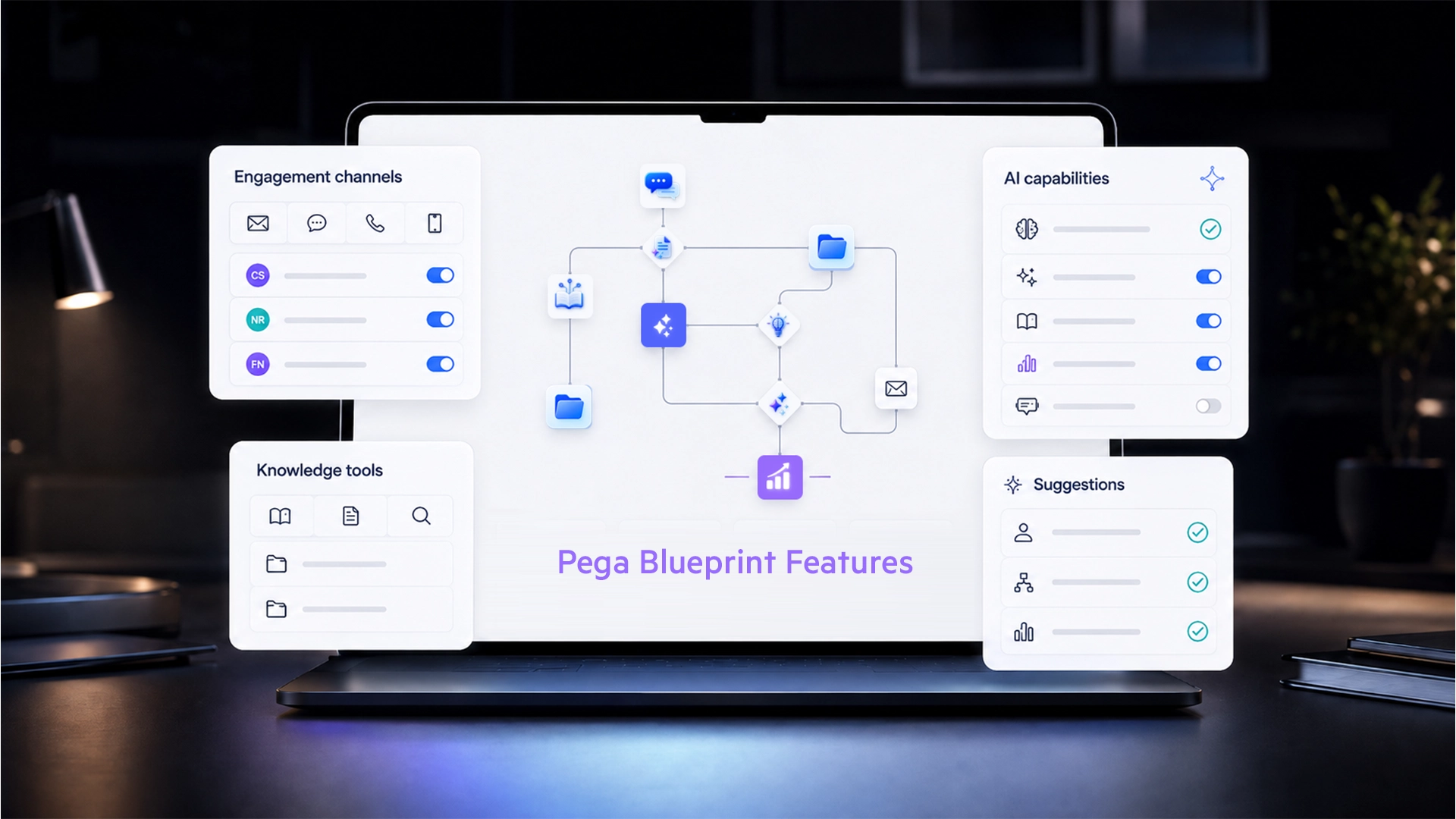
Automation in banking starts with translating business requirements into technical architecture, workflow structures, and integration logic. Pega Blueprint introduces an AI-assisted design environment that accelerates this process by converting operational requirements into structured application blueprints. Business stakeholders can describe operational workflows, decision points, and compliance requirements, and the platform generates a conceptual architecture.
In Pega Blueprint, users begin by selecting the relevant industry and sub-industry, such as Banking and Retail Banking, which enables the Pega Blueprint to generate context-aware workflows. The platform can automatically suggest case types and even auto-populate them when related media or documentation is uploaded, while still allowing users to edit or remove generated elements for refinement. Based on the defined case type, the system intelligently builds the lifecycle by creating stages and steps that represent the complete operational workflow. Users can then review and modify these stages and steps to ensure the workflow accurately reflects real business operations. Users can also define personas and configure role-based access to rule objects, ensuring that different stakeholders interact with the system according to their responsibilities. The blueprint can then be downloaded and shared with business stakeholders to review workflows, validate requirements, and collaborate before implementation.
In many low-code platforms, user interface development still requires separate UI frameworks, manual screen design, and additional front-end configuration to connect application workflows with user interactions. This can increase development complexity, particularly in banking environments where operational applications must support multiple roles, workflows, and data views.
Pega Constellation introduces a design-first architecture in which user interfaces are automatically generated from workflow definitions and data models. Instead of designing individual screens manually, developers define business processes and data structures, and the platform dynamically generates responsive user interfaces that adapt to workflow stages.
In Pega low-code, this architecture ensures applications maintain a consistent design system while reducing the need for extensive front-end development. For implementing low code automation in banking, this capability enables faster application deployment while ensuring that operational staff can interact with automation systems efficiently.
Banking institutions operate under strict regulatory requirements that govern how transactions are processed, how customer data is handled, and how operational decisions are made.
Pega low code uses a rules-driven architecture where business policies, operational logic, and regulatory requirements are defined as reusable rules. These rules control workflow behavior, decision logic, and case progression.
This architecture allows banks to update policies quickly without modifying application code, which is particularly valuable in banking, where regulatory requirements frequently evolve.
For banking institutions evaluating low code platforms, the key consideration is the ability to manage complex operations, regulatory governance, and long-running processes. Pega’s architecture is designed to support these requirements.
The value of Pega low code lies in its ability to combine multiple operational capabilities within a unified architecture. By bringing together workflow orchestration, case lifecycle management, AI-driven decisioning, and rules-based governance, the platform enables banks to automate complex processes while maintaining the control and transparency required in regulated environments.
Successful adoption of the Pega Platform requires more than understanding the technology; it also requires the right implementation strategy and expertise. While tools like Pega Blueprint simplify application design and workflow creation, enterprises, especially in regulated sectors like banking, still need experienced partners who understand architecture design, integration with legacy systems, compliance requirements, and enterprise-scale deployment. This is where a specialized implementation partner becomes critical.
Evonsys plays a key role in helping organizations accelerate their digital transformation initiatives with Pega. With deep expertise in Pega low code development, workflow automation, and banking process transformation, Evonsys supports enterprises in designing, implementing, and optimizing Pega-based solutions.
Ready to accelerate your automation journey with Pega?
Partner with Evonsys to transform your banking processes using the Pega low code platform.

.png)


.png)